
To maximize warehouse space without moving, clear out dead stock, put your fastest sellers in the best spots, use the height you already have, right-size your storage locations, and cut down on aisles. If that's still not enough, automated storage can fit the same inventory into a fraction of the floor.
Most warehouses aren't really out of space. They're out of floor. The space above the racking, the half-empty pick locations and the aisles wide enough to land a small plane are all still there. Here's how to get them back.
The 7 ways at a glance
- Clear out dead stock
- Slot your inventory by how fast it moves
- Use the height you're already paying for
- Right-size your storage locations
- Switch to flexible, modular storage
- Narrow or remove your aisles
- Automate storage and picking
Signs your warehouse space isn't working
- You move products around just to make room for incoming deliveries.
- Aisles feel crowded and picking is slowing down.
- Overflow inventory lives off-site, in a container or in someone's office.
- The backroom is packed and stock is creeping onto the sales floor.
- You'd take on another client or another product line, if only you had the room.
- Every peak season feels like a game of Tetris you're losing.
The good news: most of these are symptoms of how the space is used, not how much of it there is.
1. Clear out dead stock
The cheapest space you'll ever find is the space taken up by products nobody buys. Slow movers, discontinued items and "we might need these one day" boxes quietly take up some of your best locations.
How to do it: pull a list of products that haven't sold in 6 to 12 months. Bundle them, discount them, return them to the supplier or let them go. Then set a quarterly review so they don't creep back.
2. Slot your inventory by how fast it moves
Slotting means deciding where each product lives. Your fastest sellers should sit closest to packing, at waist height. Slow movers can live further away, higher up or lower down.
How to do it: rank products by how often they're picked, then move the top sellers into the easiest locations. Review it every quarter, because bestsellers change. You'll free up prime space and cut walking at the same time.
3. Use the height you're already paying for
Look up. In most warehouses, there's a lot of empty space between the top of the racking and the ceiling. You're paying rent on it either way.
How to do it: check your usable ceiling height (minus sprinklers, lights and safety clearances) and compare it to how high you actually store. Taller racking, overhead shelving or a mezzanine above packing stations can add capacity without adding floor. For a step-by-step way to measure it, see how to increase storage density.
4. Right-size your storage locations
Big shelves full of small products waste a surprising amount of space. So do the same products stored in three different places "temporarily". This is especially common with spare parts and components, where small items end up spread across the whole building.
How to do it: match location size to product size, use bins and dividers for small items, and merge duplicate locations. Not sure how much fits in a bin? Here's what you can store in a Pio bin.
5. Switch to flexible, modular storage
Fixed racking was designed for the inventory you had when it was installed. Your inventory has probably moved on.
How to do it: use adjustable shelving, mobile racking or vertical lift modules that can be reconfigured when your product mix or seasons change. Storage that adapts wastes less space than storage you work around.
6. Narrow or remove your aisles
Aisles store nothing. In a manual warehouse they're necessary, because people and forklifts need room to move. But every aisle is floor space you can't use for inventory.
How to do it: check whether aisle widths still match the equipment you actually use. If forklifts no longer run in an area, the aisles can often be narrower, within your local safety rules. To remove aisles almost entirely, you'll need automation, which brings us to number 7.
7. Automate storage and picking
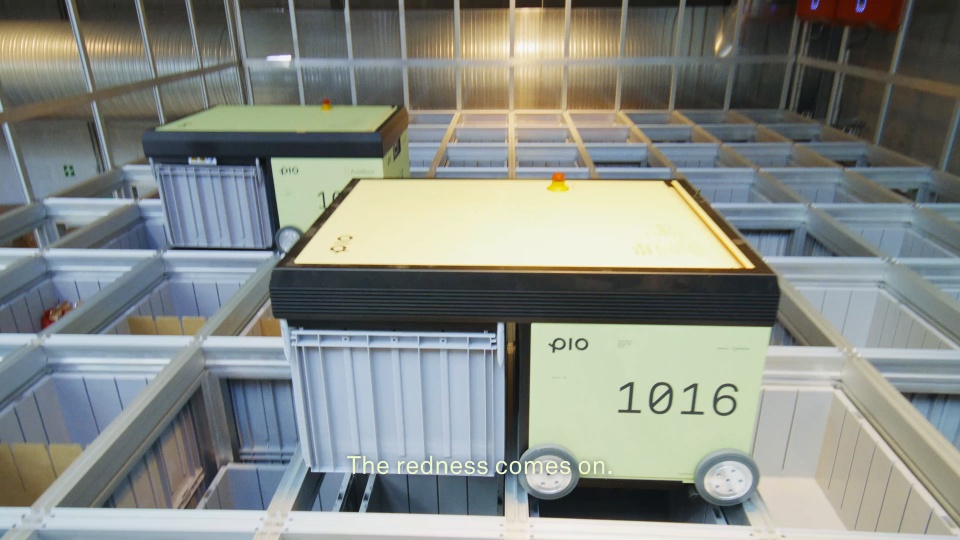
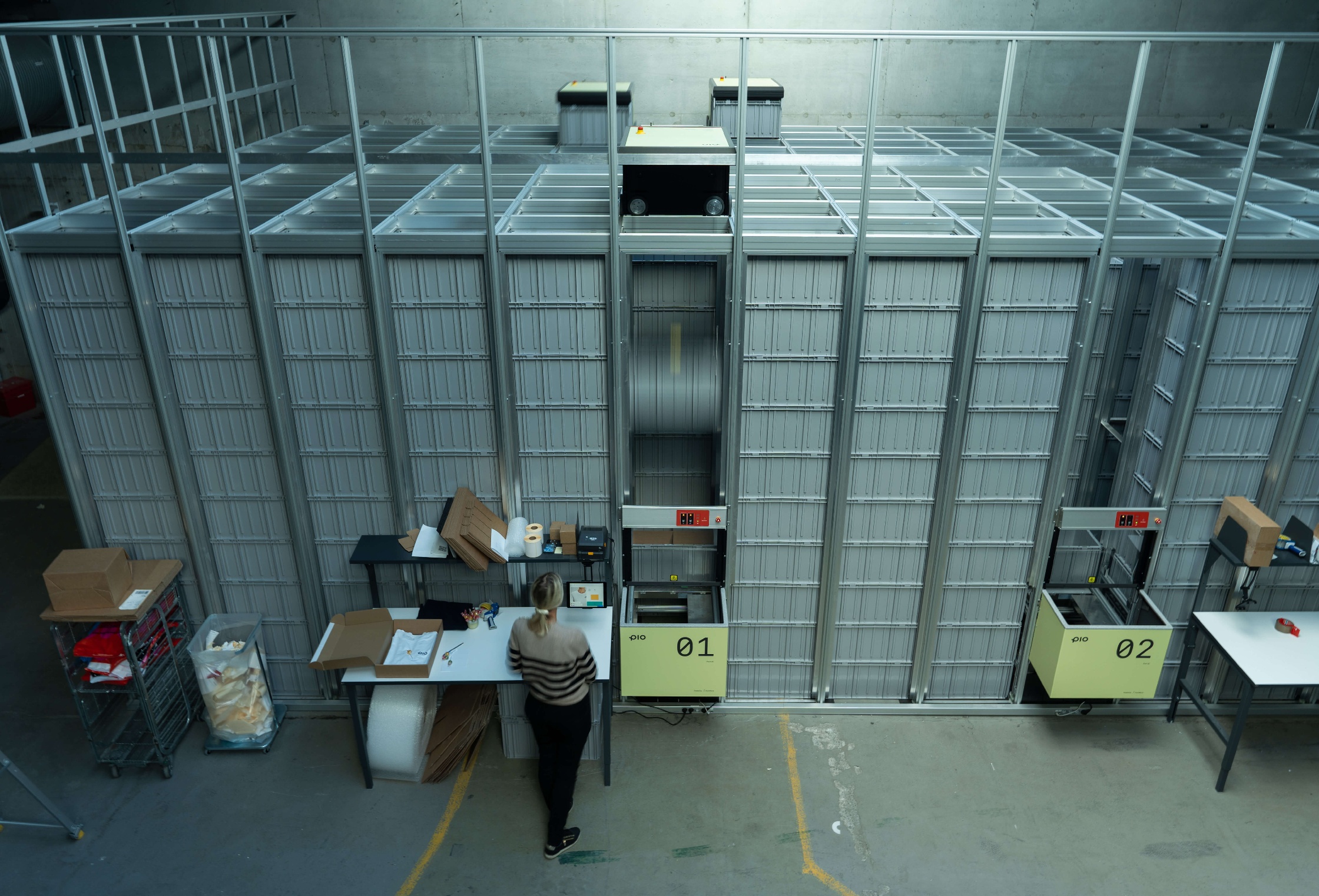
When the easy wins are done and you're still running out of room, automated storage is the biggest step change. Cube storage stacks bins directly on top of each other in a grid, with no aisles in between. Robots on top fetch the right bin and bring it to a picking port, so nobody needs to walk the shelves.
Pio customer Privada Cigar Club consolidated 3,000 sq ft of inventory into a single Pio P100, cut its total footprint by 40% and avoided opening a fourth warehouse, while using only about half of the system's capacity. Want to compare the options first? Here are the pros and cons of common warehouse automation solutions.
Where Pio fits in
Pio makes AutoStore's cube storage technology accessible to small and mid-sized warehouses, backrooms and storerooms that are short on space.
- Up to 10x more inventory in the same space
- Up to 90% less space needed
- Pick up to 5x faster, with 99.9% picking accuracy
- Available for 14 ft (4.3 m), 18 ft (5.5 m) and 22 ft (6.7 m) ceiling heights
- Robotics-as-a-Service pricing instead of a large upfront investment
Curious what it would cost? See how much warehouse automation costs, or configure your own Pio.
Frequently asked questions
How can I maximize warehouse space without moving?
Clear out dead stock, slot fast movers closest to packing, use vertical space, right-size storage locations, use flexible storage, narrow your aisles and, if you need a bigger step, automate storage and picking with a dense system like cube storage.
What is warehouse space utilization?
Warehouse space utilization is how much of your available storage space is actually used for inventory. The most useful way to measure it is by volume, not floor area, because a lot of wasted space sits above your racking.
What are the best warehouse storage ideas for small spaces?
Use vertical space, store small items in bins with dividers, merge duplicate locations, add overhead shelving or a mezzanine, and consider compact automated storage such as cube storage, which removes most aisles.
How do you optimize a warehouse layout?
Put your fastest-moving products closest to packing, group items that are often ordered together, keep aisles only as wide as your equipment needs, and review the layout regularly as your product mix changes.
How much space can warehouse automation save?
It depends on the system. Dense cube storage removes most aisles, and Pio can need up to 90% less space than traditional shelving for the same inventory.