.webp?width=48&name=Employee-photos--3-2%20(1).webp)


In a Pio system, the Pio bin is what the robots carry and what your pickers work from. Get it right and the rest of the system flows. That's why it's worth understanding what the bin can do, because most people underestimate it.
What Is a Pio Bin?
A Pio bin is a hard-sided storage container that holds inventory inside an automated cube storage grid. Bins are stacked on top of each other in deep columns inside the grid, and robots retrieve them on demand, carrying each one to a goods-to-person workstation where someone picks, packs, or processes orders. Think of it less like a shelf and more like a moving part of the system, always in circulation, always delivering exactly what's needed.
The key specs:
-
Interior dimensions: approximately 16 × 24 × 12 inches (W × L × H) (403 × 603 × 312 mm)
-
Storage volume: 2.67 cubic feet (75.5 liters)
-
Load limit: 66 lbs (30 kg)
-
Material: high-density polyethylene (HDPE)
-
Capacity: up to 16 compartments per bin, each holding one SKU
Fun fact: Pio uses the same bins as AutoStore, and some of those bins have been running for years without ever needing to be replaced, a few for as long as 25 years. Same bin, same robots, still going. Not a marketing claim, just what happens when you build something properly.
What Goes in a Pio Bin?
The interior holds more than most people expect, generous enough to handle around 85% of goods sold on Amazon.
In practice, a single bin can hold approximately:
-
70 folded adult T-shirts
-
250 decks of playing cards
-
500 Twix twin bars
-
18 standard 750 ml wine bottles
-
5 shoe boxes
Whether you're storing something bulky or lightweight, the robots handle each bin with the same smooth, precise movement every time, with no throwing, no dragging, and no pressure. With a load capacity of up to 66 lbs (30 kg), bins can accommodate surprisingly heavy products as well as lightweight consumer goods.
Bins are stacked inside a fully enclosed grid, with the weight distributed across the grid structure rather than pressing down through the contents, so items at the bottom are just as protected as the ones at the top.
How Do Pio Bin Dividers Work?
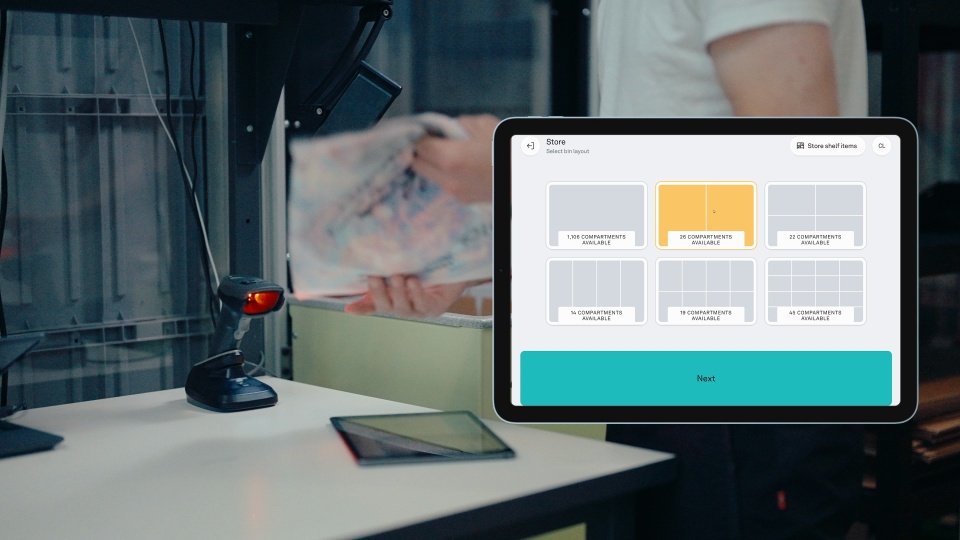
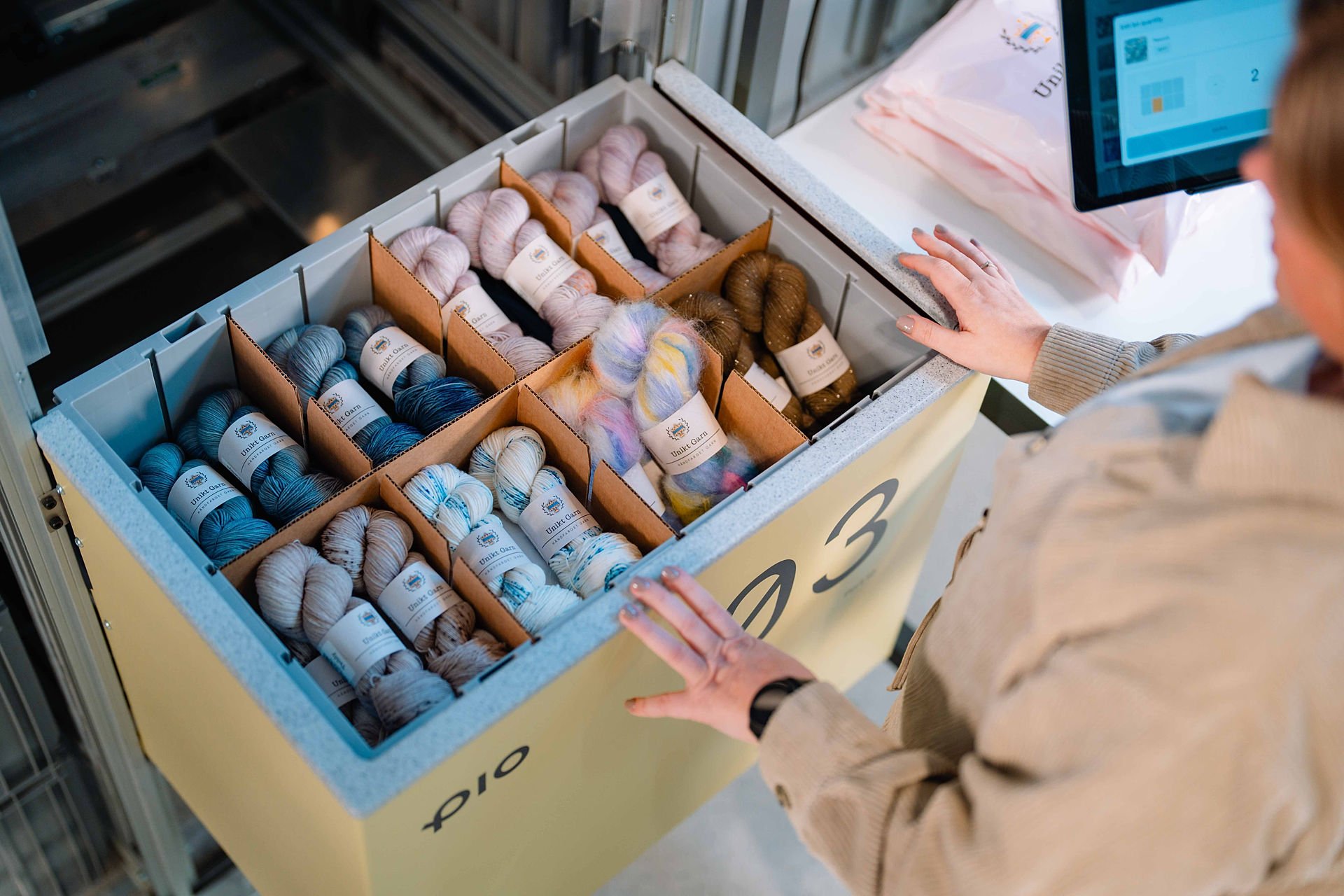
Here's where it gets interesting. Each bin can be fitted with cardboard inserts that split the interior into separate compartments, each one holding a different SKU, so one bin becomes two, four, eight, or up to sixteen separate picking locations. It's one of the most effective ways to increase storage density without adding a single square foot of warehouse space.
The configurations available are:
-
2-way split: Good for medium-sized items where you need a bit more separation
-
4-way split (parallel): Better suited to longer or narrower products stored lengthways
-
4-way split (square): Works well for evenly sized items that don't need the full bin length
-
8-way split: For smaller SKUs where storage density starts to matter
-
16-way split: For very small or slow-moving items where every inch counts
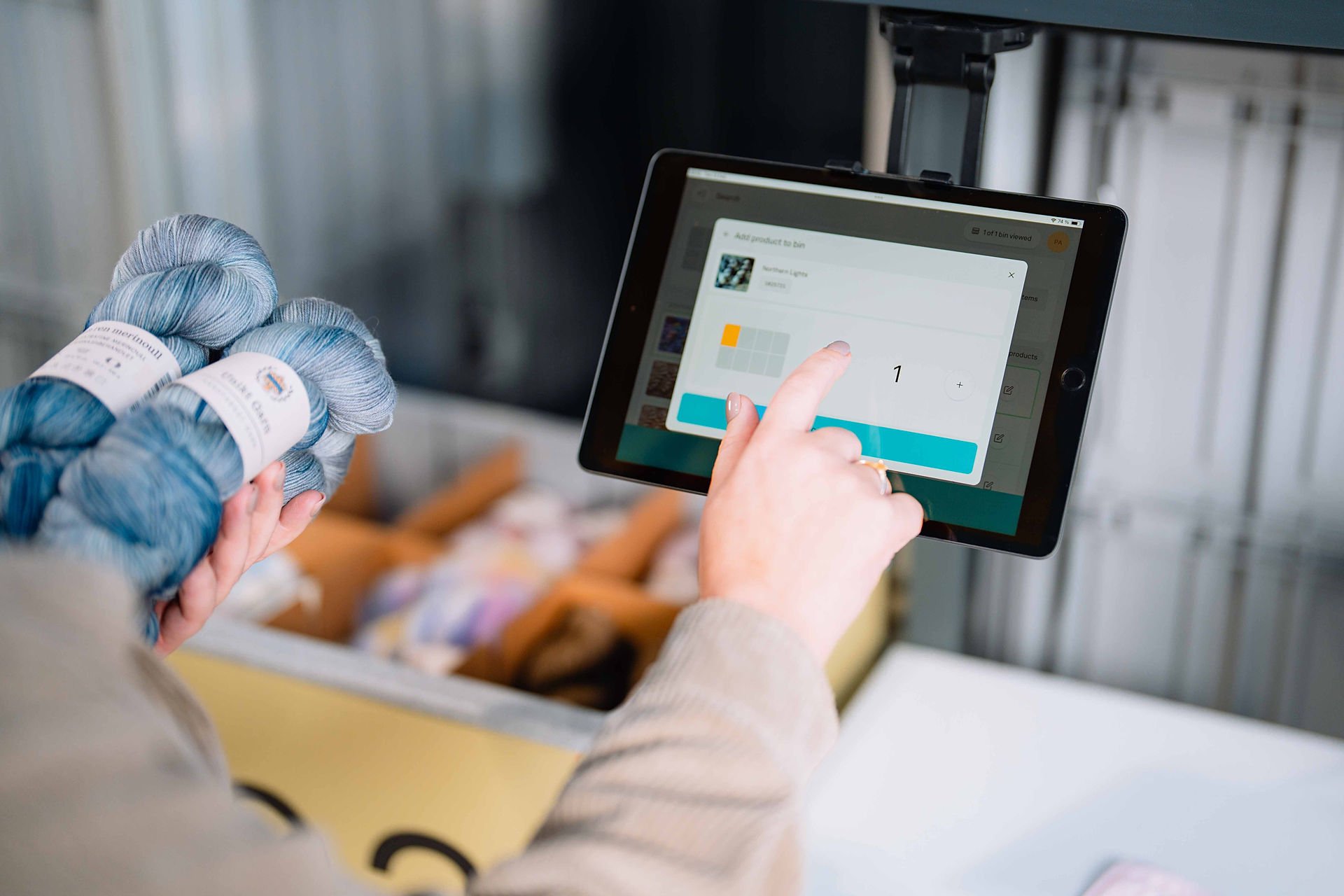
Think about what a 16-way split actually makes possible: screws, spare buttons, SIM card adapters, USB connectors, brushes. The kind of small components that vanish the moment they share a space with anything else. One bin, divided properly, can hold an entire product category. On the other end, a bin with no dividers at all is perfectly at home with bulky products, like winter parkas or bed pillows.
The dividers themselves are cardboard, so reconfiguring takes minutes. As your inventory shifts, whether that's new products, discontinued lines, or seasonal changes, the setup shifts with it. The bins stay, and everything else adjusts around them.
How Do Robots Retrieve a Pio Bin?
The Pio bin doesn't work alone. Robots move across the top of the grid, locating the right bin, gripping it from above, lifting it out of the stack, and carrying it to a workstation where a picker is waiting. Once the item is picked, the bin goes straight back in.
On average, retrieval takes around 25 seconds across Pio systems. For operations handling thousands of picks a day, that kind of consistency makes a real difference. No walking warehouse aisles, no searching for inventory, no picking from the wrong location.
Will Your Products Fit in a Pio Bin?
If you're considering whether automation is right for your business, it's worth starting here. Most people assume their products are the reason it won't work: too big, too small, too varied. The Pio bin holds a lot more than it looks like. Don't let assumptions about size be the reason you never find out.
See exactly how Pio works, the grid, the robots, the workstation, all of it. Or if you'd like to explore what a Pio setup could look like in your space, start here.