.webp?width=48&name=Employee-photos--3-2%20(1).webp)


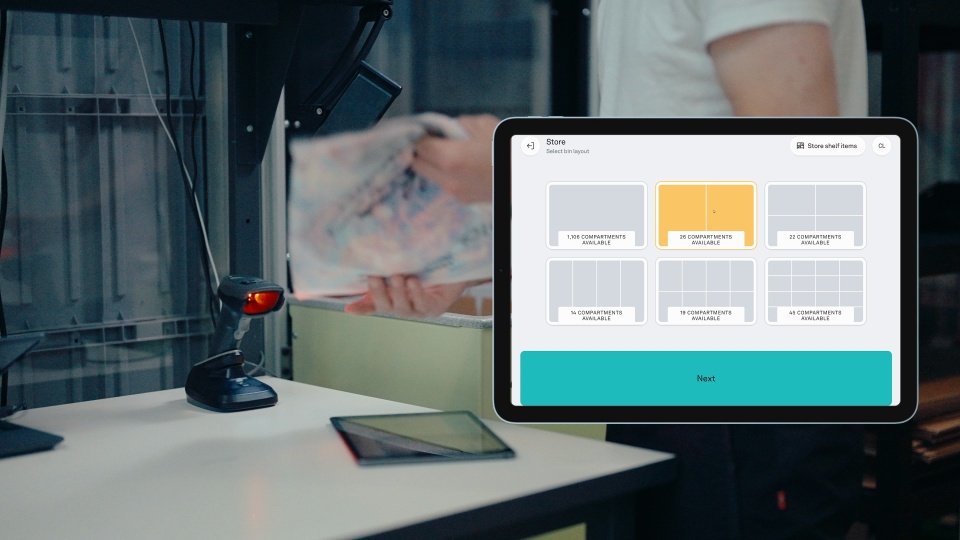

That is usually when automation enters the conversation, and just as quickly gets pushed aside. Not because it does not make sense, but because it feels expensive, complex, and out of reach.
What many businesses do not realize is that support for warehouse automation is not only possible, it is often already within reach.
In most cases, this support comes from grants and public programs that co-fund projects improving digitalisation, productivity, and innovation. The challenge is that it does not show up in obvious ways, so it is easy to overlook.
So what does this actually look like in practice, and where do you even start? Let’s break it down.
Grants and Programs for Warehouse Automation Exist
Can you get grants or program support for warehouse automation?
Yes. While there are very few grants specifically for robots or warehouse systems, many public programs support automation when it improves productivity, digitalisation, or operational efficiency.
If you have ever searched for this, you have probably noticed something frustrating: there is almost nothing labeled “warehouse automation funding” or “robot grants.” That’s because most programs are not designed around what you are buying. They are designed around what you are improving.
For example, many large initiatives focus on digitalisation and innovation rather than direct equipment purchases. So instead of seeing categories like robots or storage systems, you will find terms like:
- digitalisation or digital transformation funding
-
innovation and automation programs
-
productivity and operational improvement grants
-
SME support or accelerator programs
-
pilot and demonstration project funding, including robotics or AI
These are often the same funding streams, just described differently. You might also see terms like advanced innovation or scale-up technologies, which usually point to programs supporting companies improving their operations with new tech.
To make this easier to navigate, it helps to look at how these programs show up by region. The examples below are just a starting point, there are many more programs available depending on your location.
Europe
Across Europe, support for warehouse automation is more common than many expect. At a broader level, European programs such as the Digital Europe Programme and the European Innovation Council focus on digitalisation and innovation rather than direct equipment purchases. Countries like Germany, France, and the Nordics also offer national programs focused on automation and productivity improvements.
In many cases, businesses can get support for part of the investment, especially when the project clearly improves how operations run. This means automation projects often qualify, particularly for SMBs, when they show a clear impact on productivity, efficiency, or digitalisation.
At a more local level, there are also very practical, region-specific programs. For example, in the Netherlands, the Overijssel region offers a program focused on creating more future-proof and efficient workspaces. We are currently seeing this in practice, where a business is in the process of securing this type of grant to implement a Pio system.
United Kingdom
In the UK, funding is often accessed through regional support networks that guide businesses to the right programs. A practical starting point is the Growth Hub network, where businesses can find local support and funding guidance based on their postcode.
United States
In the US, most grants are run at the state level and are typically designed to support automation, robotics, and solutions that help address labor shortages. For example, Iowa offers a Manufacturing 4.0 Technology Investment Program that supports automation and digitalisation projects.
Similar initiatives exist in states like Michigan, Maryland, and Rhode Island, where grants may cover part of the cost of robotics or automation projects. If you want a broader overview of what is available across different states, this article is a useful starting point.
Across all regions, the pattern is the same: programs fund outcomes like productivity, digitalisation, and efficiency, not specific equipment.
How Much Grant Support Can You Get
Grants rarely cover the full cost, but they can significantly reduce the investment.
Depending on the country, program, and how the project is positioned, businesses can typically access:
- around 20% to 70% of the total investment through grants or innovation programs (in line with EU funding structures such as Horizon Europe, where companies can receive up to ~70% of eligible costs).
-
additional support through tax incentives or regional subsidies
The exact amount depends on factors like company size, level of innovation, and expected impact.
In practice, companies use this support to reduce upfront costs, then plan the remaining investment based on their budget and growth.
The key is not expecting funding to cover everything, but using it to make the overall project viable and easier to move forward with.
What “Getting Grants” Actually Means
A common misconception is that grants cover everything upfront.
In reality, it is about positioning your project to fit criteria like innovation, digitalisation, and productivity improvement.
For most SMBs and mid-sized businesses, accessing grants and programs typically involves:
-
positioning the project around productivity, digitalisation, or innovation
-
applying to regional, national, or EU-level programs
-
starting with a defined scope or pilot project
- demonstrating measurable impact (efficiency, cost reduction, growth)
scaling once initial support is secured
So instead of thinking about grants as a one-off event, it is more useful to see them as part of a broader approach to improving and scaling your operation.
Where to Start with Warehouse Automation
If you are wondering where to begin, the key is to stay grounded in your actual operation rather than jumping straight into solutions. Start by looking at where your warehouse is under pressure.
That might be picking speed, inefficient use of space, or the amount of manual handling required to get orders out the door.
From there, a practical path usually looks like this:
- Identify your biggest bottlenecks
Focus on areas where time, cost, or errors are adding up. -
Look for scalable, low‑disruption solutions
Avoid systems that require a full rebuild from day one. - Understand which type of automation fits your operation
Think in terms of use cases rather than a single solution. In many warehouses, a simple combination does the job: goods‑to‑person to speed up picking, paired with compact or cube storage to use vertical space and increase density. Add conveyors or sortation if throughput is the constraint. The goal is to choose the mix that removes the most friction in your workflow. -
Estimate a simple ROI
Even a rough calculation of labor savings, space utilization, and throughput gains can guide decisions. - Then explore grants and programs
With a clear value case, grants and programs become much easier to explore. At this stage, you are evaluating real options rather than searching blindly, which speeds up decisions and improves approval odds.
Which Warehouse Automation Is Easier to Get Grants For
Not all automation solutions are equally easy to fund. Large, complex systems often require higher upfront investment and longer timelines, making them harder to justify.
This is where it helps to rethink what automation actually looks like. Not every solution needs to be large or complex to be effective. There are smaller, more flexible systems that use the same underlying technology but are easier to implement and, importantly, easier to fund.
Cube storage automation is one of those examples, and solutions like Pio bring together both hardware and software to create a more complete system. That combination matters, because it aligns with how many funding programs are framed around digitalisation, smarter operations, and measurable productivity improvements.
Because it is modular and compact, it aligns better with how SMBs operate and often solves multiple bottlenecks at once, from space to picking speed, strengthening the business case.
It allows you to:
-
start with a smaller investment
-
expand capacity over time
-
make better use of vertical storage space
-
improve picking efficiency quickly
-
achieve faster and more predictable ROI
This combination of operational impact and lower risk makes it much easier to position, justify, and ultimately secure grant support or program funding.
Why ROI Helps You Get Funding
For many businesses, the turning point is realizing automation is not just a cost—it avoids larger costs later, like expansion, hiring, errors, and complexity.
That matters because these avoided costs are exactly what make a project easier to justify and approve. When you can show that automation replaces bigger expenses, it becomes much easier to secure support through grants and programs.
Instead of expanding into a bigger warehouse or continuing to increase headcount, some companies choose to optimize the space they already have.
Introducing a more compact and scalable system allows them to:
-
increase storage capacity within the same footprint
- reduce manual handling time
- improve accuracy and throughput
- delay or avoid relocation
In many cases, the cost of automation ends up being lower than the cost of continuing with the current setup, which strengthens the case when applying for grants or public programs.
Bringing It Together
Key takeaways:
-
Grants for warehouse automation exist, but are often labeled under digitalisation or innovation
-
Most businesses start by identifying the right type of automation based on their needs, and then explore programs that support that project
-
Starting with the right type of automation makes it easier to secure support
-
Modular solutions reduce risk and improve ROI, strengthening the overall case
Grants and programs for warehouse automation are more accessible than they seem, especially for growing businesses. The key is understanding that you are not looking for funding first, you are identifying what type of automation actually makes sense for your operation.
Start there. Look at your bottlenecks, your space, your process, and what is slowing you down. Then explore the types of automation that solve those problems, especially solutions that are modular, scalable, and easier to implement.
Once that is clear, support becomes much easier to find and secure.These opportunities exist at local, national, and European level, especially for projects focused on digitalisation and productivity.
This is where solutions like Pio fit naturally. They allow you to start smaller, improve both space and picking efficiency, and grow over time without needing a large upfront commitment.
In the end, you are not trying to fund a complex system. You are making your warehouse work better, and that is what makes automation not just possible, but practical.
FAQ: Grants and Getting Started
How to get grants for warehouse automation?
Start by framing your project around efficiency, productivity, and growth. Then explore grants and programs tied to digitalisation and innovation rather than direct equipment funding.
Is warehouse automation affordable for small businesses?
Yes. Scalable solutions like cube storage allow businesses to start small and expand gradually. In addition, models like leasing or Robotics-as-a-Service (subscription-based automation) reduce upfront costs and make automation more accessible for smaller businesses.
Are there grants for warehouse automation?
There are very few grants specifically for automation equipment. However, many programs fund digital transformation, smart warehouses, and AI-driven inventory systems, where automation plays a key role.
How to approach warehouse automation grants as an SMB?
Most SMBs start by identifying the right automation based on their needs, then explore relevant programs, apply with a clear use case, and sometimes run pilot projects before scaling.
Where to start with warehouse automation?
Start with your biggest bottleneck, explore scalable solutions, estimate ROI, and then look at funding options.