.webp?width=48&name=Employee-photos--3-2%20(1).webp)


When people talk about fulfillment, the conversation almost always focuses on getting orders out the door quickly. But there is another side of fulfillment that quietly creates just as many operational headaches: returns.
For many growing brands, returns start as a small inconvenience. A few packages come back each week. Someone opens the box, checks the item, processes the refund, and puts the product back on the shelf. It feels manageable.
But as the brand grows, the warehouse is no longer only shipping products out. It is also receiving a steady flow of items coming back.
That is when many teams discover something important: most warehouses are designed for products moving forward, not backward.
To understand why this happens, it helps to first look at how most warehouses are designed.
The fulfillment process
Most fulfillment operations follow a predictable rhythm:
-
Inventory arrives at the warehouse
-
Products are stored in locations such as shelves or boxes
-
Orders are picked from storage locations
-
Items are packed at packing stations
-
Parcels are shipped to customers
The entire operation is designed around this outbound flow, so it is no surprise that most warehouse layouts support this movement. But returns disrupt that structure.
Instead of products moving from the shelf to the customer, they now move in the opposite direction, from the customer back into the warehouse.
While a return may seem simple from the customer’s perspective, it usually triggers several additional steps inside the warehouse. In logistics, this process is known as reverse logistics.
A warehouse return example
A simple example shows why the returns process quickly becomes more complicated than it first appears.
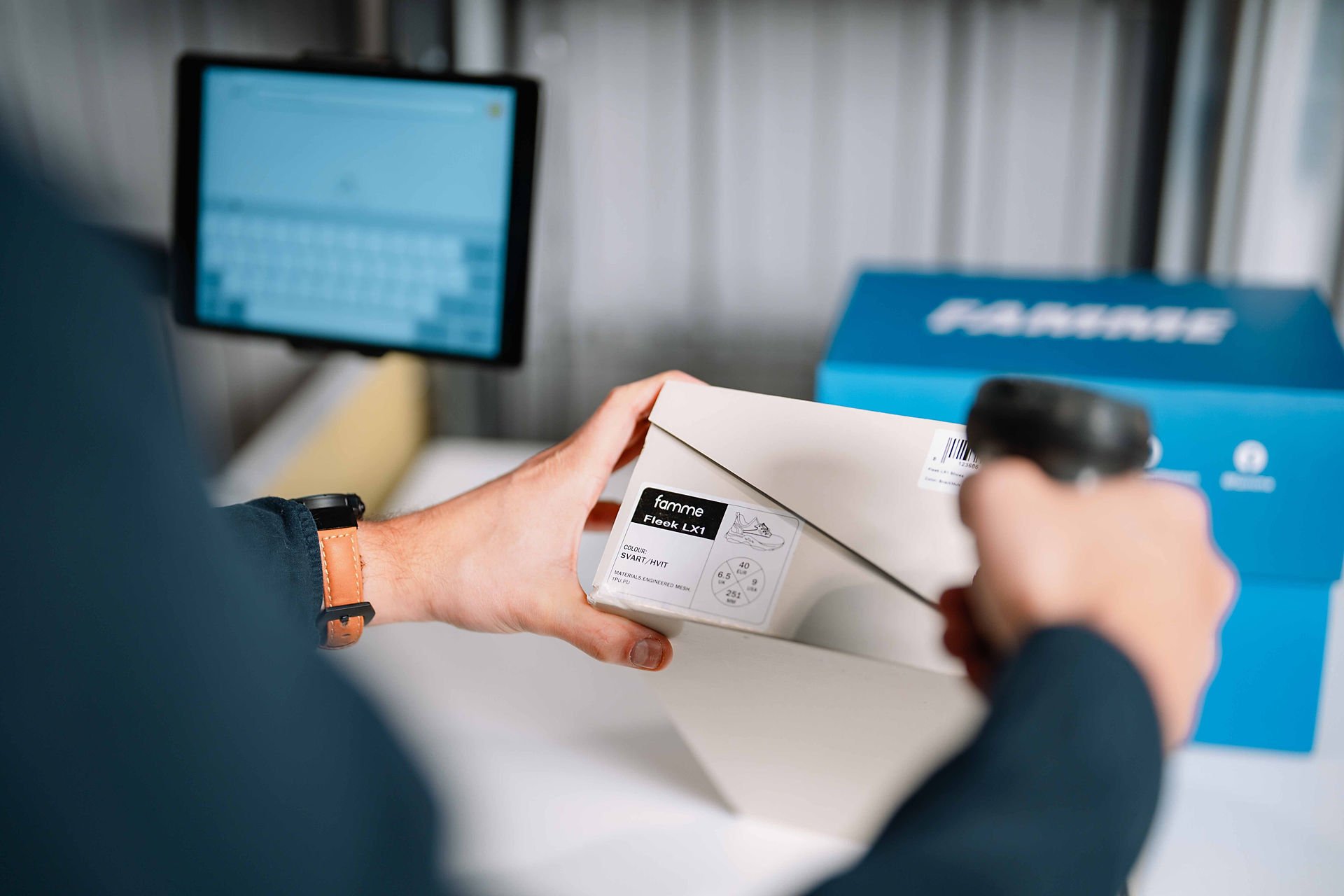
Imagine a clothing brand selling basic T-shirts online. A customer orders two sizes to try at home, keeps one, and returns the other. When the returned parcel arrives at the warehouse, several steps are required before the item can be made available for sale again:
-
Receive the returned parcel
-
Inspect the T-shirt
-
Refold or repackage the item if needed
-
Update the inventory system
-
Return the product to its storage location
On its own, this may seem minor. But when dozens or hundreds of returns arrive each day, these small tasks quickly add up, especially during peak season when the volume increases.
How returns affect inventory accuracy
Beyond the extra workload, returns also create another challenge inside the warehouse: inventory accuracy.
When a returned product arrives, it rarely goes straight back into sellable stock. Most items must first be inspected and processed before they can be added back into inventory. Until that happens, the product exists in a kind of operational grey area. It is physically inside the warehouse, but it is not yet available for sale.
Consider the returned T-shirt from the earlier example. The item has arrived back at the warehouse, but it has not yet been inspected or processed.
The inventory system may show ten units available, but the physical situation in the warehouse might look slightly different:
-
Seven items are on the shelf and ready to ship
-
Two returned items are waiting in a returns area to be inspected
-
One item is still sitting on a packing table after being opened
Now the inventory system shows one thing, while the warehouse floor tells a different story.
For fast-moving products and growing operations, mismatches like this can lead to overselling, unexpected stockouts, and frustrated customers who ordered something that suddenly cannot be shipped.
As ecommerce continues to grow, situations like this are becoming more common. In industries such as fashion, return rates often reach 25% or more.
This means returns quickly become a regular operational task rather than an occasional one.
Another challenge is simply where returns are handled. In many growing warehouses, returns are processed wherever space is available: a desk near the office, a corner of the packing station, or a temporary table near the inbound area.
Over time, these areas fill up with opened boxes and partially inspected items. Inventory becomes harder to track, and the rest of the warehouse operation begins to slow down.
.jpg?width=1920&height=1280&name=Sports-Pio-05263%20(1).jpg)
The returns process starts with the fulfillment process
Once returns become a regular part of warehouse operations, the goal is not to eliminate them entirely. Instead, the focus shifts to handling them efficiently without disrupting the rest of the workflow.
Many warehouses improve their returns process with a few practical adjustments:
1. Create a dedicated returns area
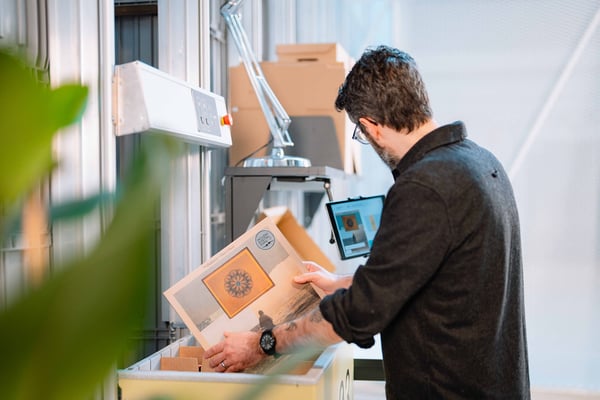
One of the simplest improvements is to define a specific area where returned products are received and inspected.
When returns are handled in a dedicated space, it becomes easier to track which items have been inspected and which still need attention. It also prevents partially processed items from ending up on packing stations or storage shelves, helping the rest of the fulfillment workflow run smoothly.
2. Define clear inspection rules
Returned products often require quick decisions. Can the item be restocked immediately? Does it need to be repackaged? Or should it be removed from inventory entirely?
Clear inspection rules and guidelines help warehouse teams answer these questions quickly and handle returns consistently, reducing delays when items arrive.
3. Analyze returns data
Every return contains valuable information, and by tracking the reasons why products are returned, companies can often identify patterns such as sizing issues, product defects, or inaccurate product descriptions.
Fixing these issues upstream can significantly reduce the number of returns entering the warehouse in the first place.
Tools to simplify the returns process
Operational improvements help organize returns, but technology can make the process even easier.
Today, many warehouses use digital tools and automation systems to handle returned products more efficiently. These tools can register items when they arrive, guide teams through inspection, and update inventory once a product is approved for resale. This helps prevent inventory errors when returned items are still waiting to be processed.
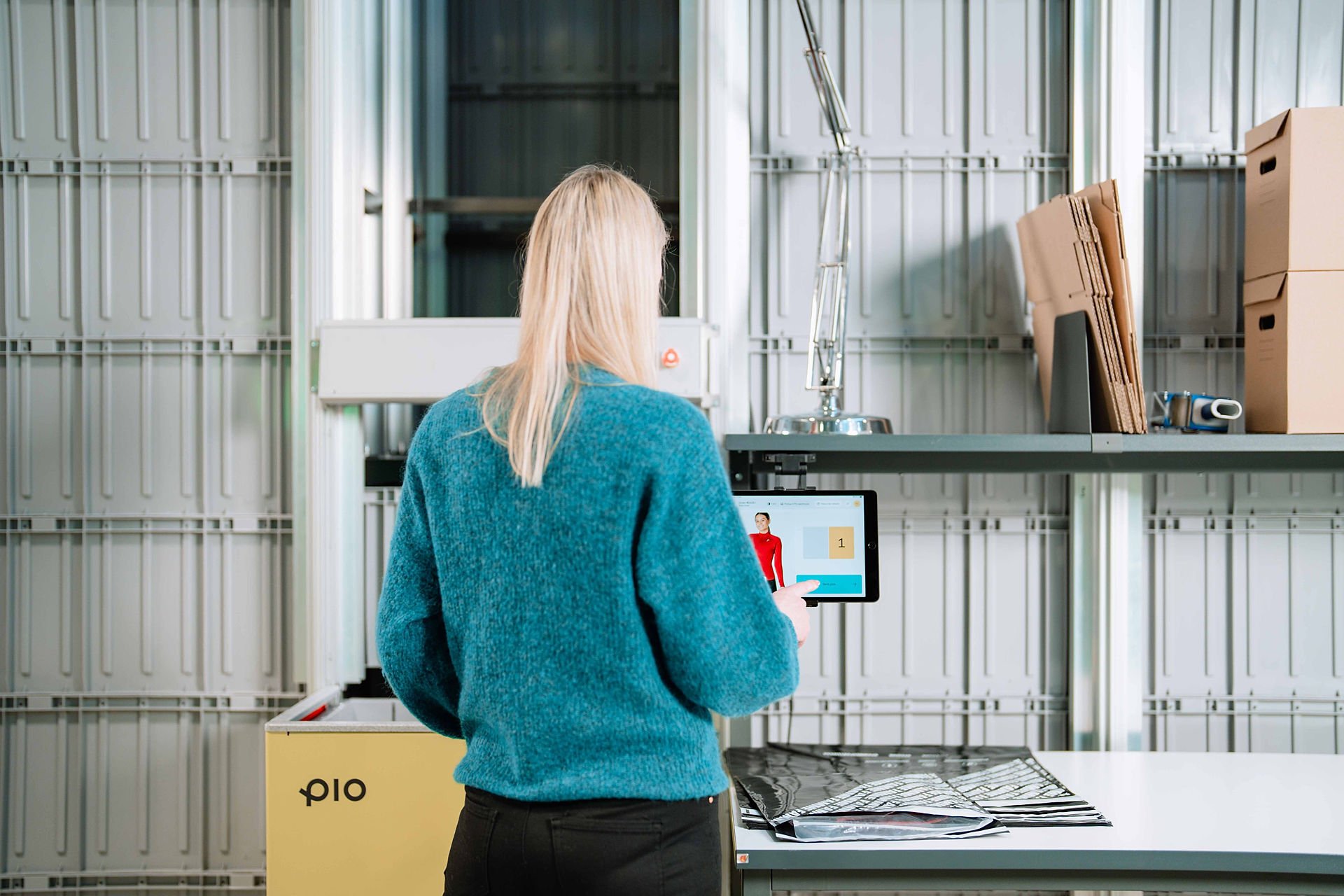
One example is Pio, a warehouse automation solution designed for growing ecommerce businesses. Pio combines robots, a compact storage grid, and the Pio app to help warehouses use space more efficiently and simplify everyday workflows. Returns can also be handled within the system.
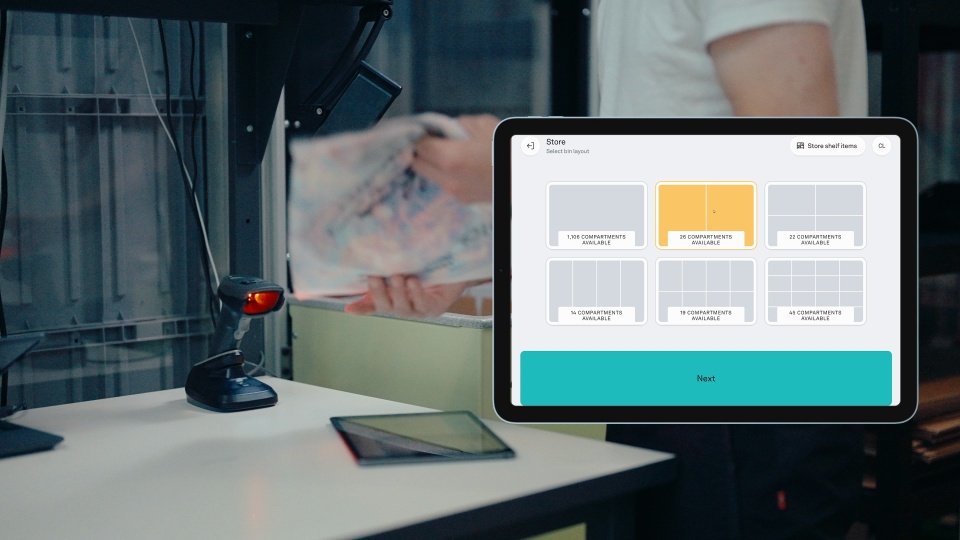
With the returns feature in the Pio app, warehouse teams can quickly process returned items and store them back into inventory.
The process typically follows three simple steps:
-
Register the return: Log the return in your ecommerce platform so the returned item is tracked across your system.
-
Enter the storing flow: In the Pio app, select “Store,” choose the appropriate bin layout, and update the inventory count.
-
Store the item back in the grid: The system identifies the optimal bin and brings it directly to the workstation.
This allows warehouse teams to focus on inspecting returned items instead of searching for storage locations, helping keep the rest of the warehouse workflow running smoothly.
Returns in the modern warehouse
For many years, warehouse operations were designed almost entirely around getting orders out the door as quickly as possible. But as ecommerce continues to grow, warehouses also need efficient ways to handle what happens when products come back.
Returns are no longer something that happens occasionally. For many businesses, they are now a predictable part of daily warehouse operations.
The companies that manage returns well are not the ones trying to eliminate them entirely. Instead, they design flexible processes that allow returned products to move smoothly through the warehouse without disrupting the rest of the operation.
With clear workflows and modern tools such as warehouse automation, teams can inspect items, return them to inventory quickly, and keep fulfillment running efficiently.
As ecommerce continues to evolve, the warehouses that adapt to this reality will be the ones best positioned to grow.