.webp?width=48&name=Employee-photos--3-2%20(1).webp)


If you run a small or medium business, you’ve probably had this thought at least once:
“Automation sounds great, but it’s definitely too big for us.”
We have heard this from many founders who never imagined warehouse automation could fit a warehouse their size. They picture giant fulfillment centers and billion-dollar systems, but then they see what automation for small teams actually looks like, and everything changes.
Automation today is not about size or big budgets. It is about getting your warehouse to finally feel like it’s working with you, not against you. It’s about more efficient days, calmer weeks, and getting excited about growth again instead of dreading it.
If you’re running out of space, walking more than picking, or bracing yourself for another chaotic peak season, take a breath. The right automated warehouse solution can bring back control, confidence, and the spark that made you start your brand in the first place.
Here’s a simple guide to help small teams understand what warehouse automation actually means for companies their size.
1. What automated warehouse solutions mean for SMBs
Automation isn’t as complex as it sounds. It simply means taking the most manual tasks of your day and replacing them with something faster and more reliable.
For small and medium businesses, warehouse automation usually falls into three layers:
- digital tools that organize and track your work
- physical systems that move and store goods
- and the combination of both
A Warehouse Management System, for example, helps you plan and prioritize orders, but it won’t reduce walking or speed up picking on its own.
This is usually when people start thinking about the physical side of automation, and it’s often what feels the most overwhelming at first. Many imagine giant robots or heavy installations, when in reality there are automated warehouse solutions designed specifically for small teams, tight warehouse spaces, and the fast pace of ecommerce.
2. The everyday challenges
Running a small or medium sized warehouse comes with its own set of challenges. You don’t need enterprise-level problems to feel overwhelmed, because small issues stack up fast and start affecting your entire day.
- Space disappears: Shelves fill up, SKUs multiply, and suddenly the warehouse feels two sizes too small.
- Picking feels slow: Your team spends more time walking than actually picking. It’s tiring and unpredictable.
- Mistakes creep in: A wrong item here, a missed bin there and suddenly customers and support feel the impact.
- Hiring becomes unrealistic: Especially during peak seasons when you need help the most.
- Campaigns break everything: Black Friday, Christmas, influencer mentions.
Your team does everything right, but the warehouse simply can’t keep up. If this sounds familiar, you’re not alone, and you might be closer to a fix than you think.
These problems are exactly why many SMBs start exploring automated warehouse solutions built for smaller operations.
3. Types of warehouse automation made simple
There are many technologies out there, but here’s what actually matters for small and medium teams looking for warehouse automation that matches their scale.
- Warehouse Management Systems: Great for batching, filtering, prioritising, and organising work. Doesn’t automate physical movement unless paired with hardware.
- Barcode scanning: Reduces mistakes but won’t speed up picking or reduce walking.
- Putwalls: Smart for sorting and consolidating orders. Helps with high SKU overlap.
- Conveyors: Move goods between zones. Strong, but usually better for bigger footprints.
- AMRs: Robots that drive around your warehouse. Impressive, but often too complex or costly for SMBs.
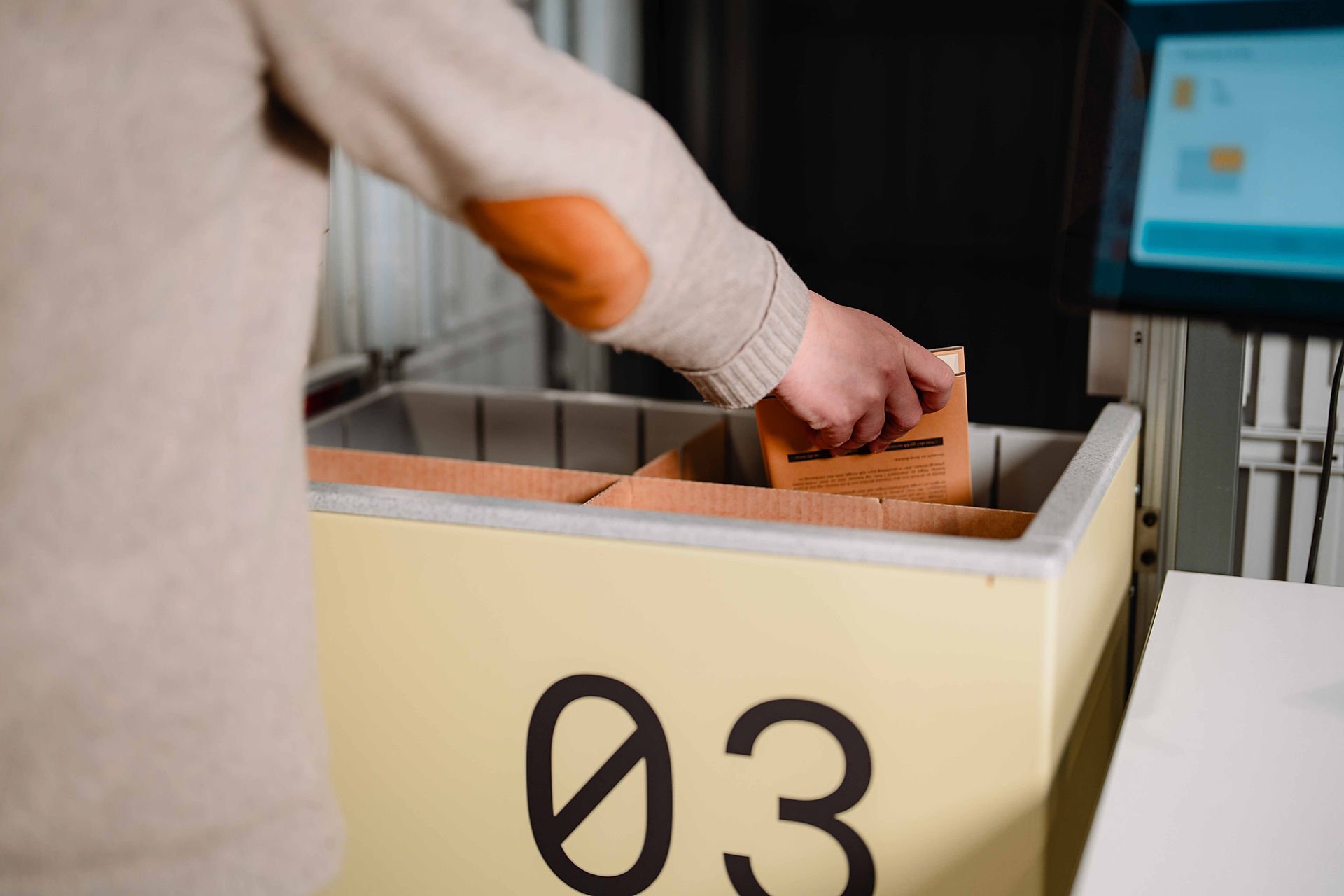
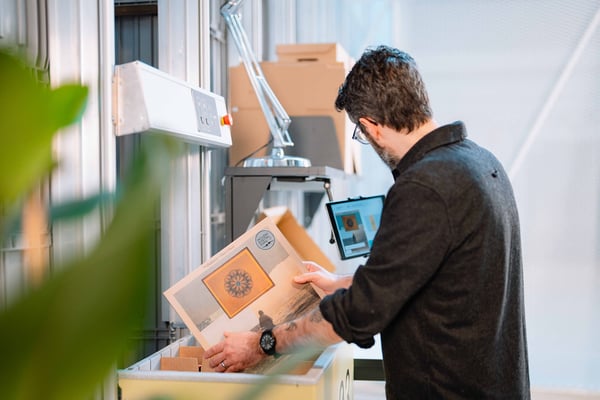
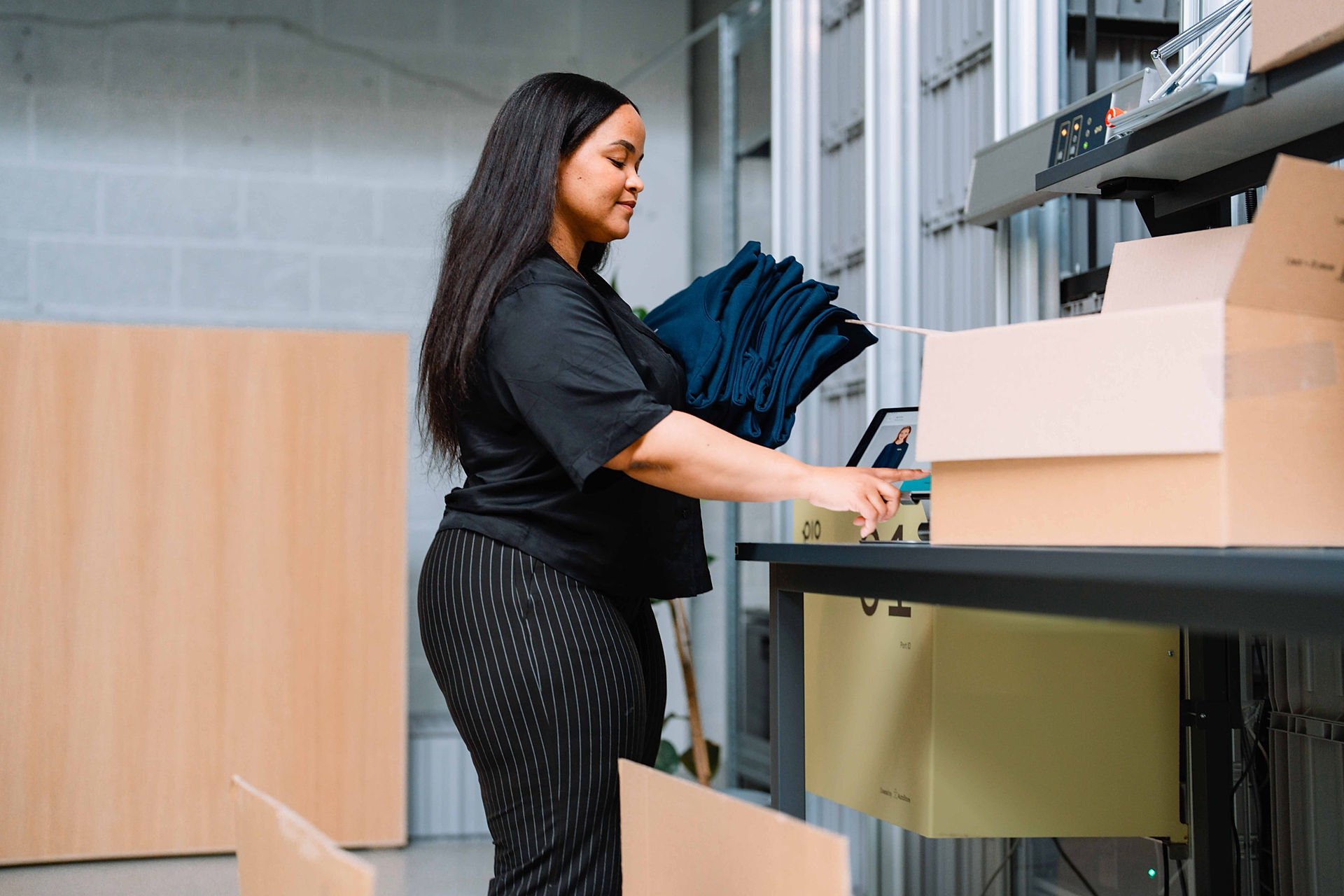
- Cube storage: This is where small teams see the biggest transformation. Cube storage uses your vertical space, brings goods directly to the operator, and almost eliminates walking. It creates fast, predictable workflows that grow with your brand.
We’ll explore cube storage in more detail later, because it’s often the automated warehouse solution that gives small teams the biggest lift.
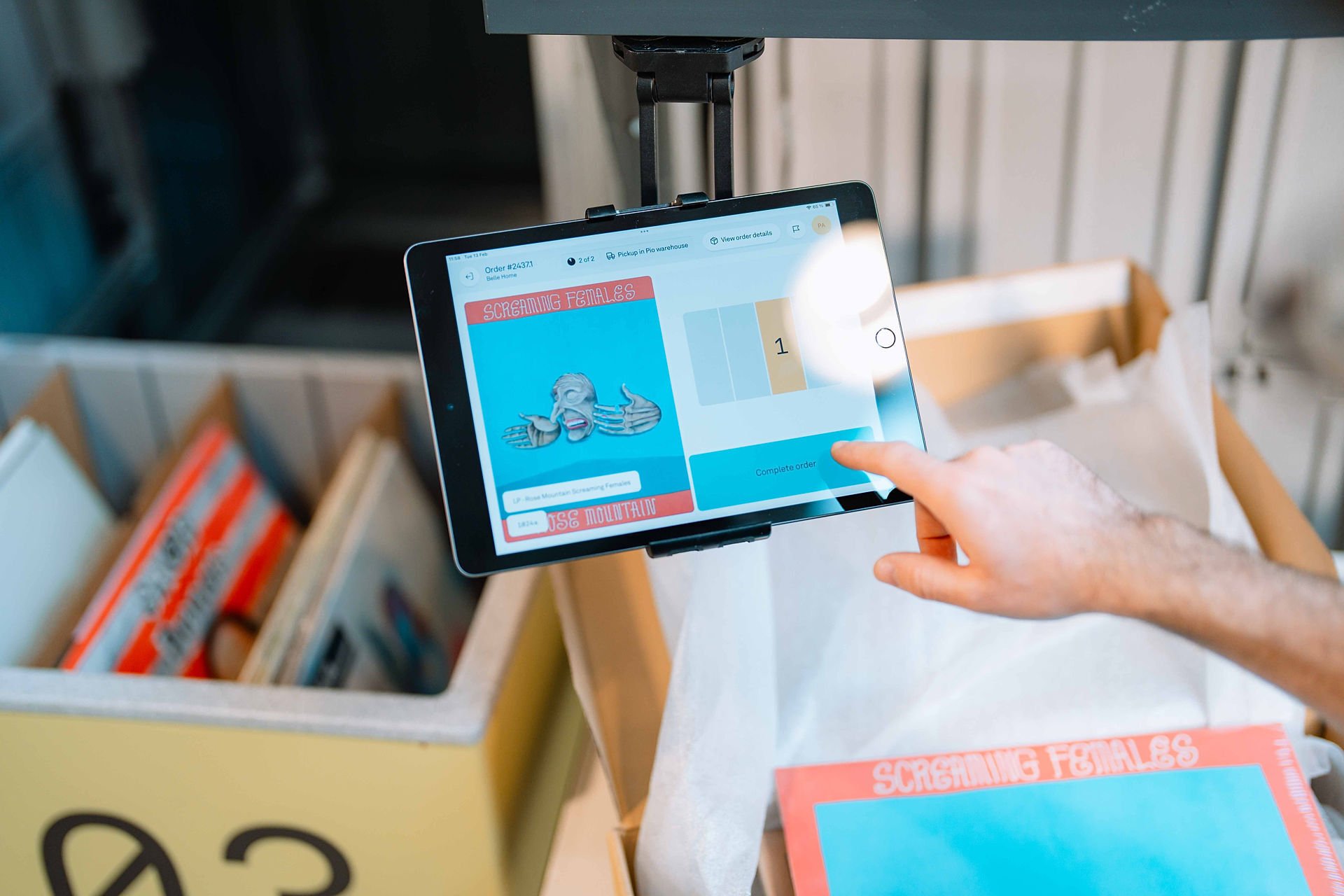
4. A quick look at AI in warehouse operations
There’s a lot of talk about AI these days, and many growing brands are starting to ask what it could realistically do inside a small or medium warehouse. The truth is much simpler than most people expect: AI helps you plan, automation helps you move.
AI can support better decisions around things like:
- demand patterns
- SKU velocity
- batching and order grouping
- inventory forecasting
- preparing for peak periods
These insights are helpful, especially when your team is growing fast, but AI alone won’t:
- reduce walking
- speed up picking
- increase storage capacity
- fix layout issues
It can guide your decisions, but it cannot replace the physical work inside a warehouse.
AI becomes genuinely useful when it works alongside predictable workflows. The more consistent your processes are, and the more data you record, the easier it is for AI to spot patterns and help you stay ahead.
That’s why many small teams pair digital planning tools with physical warehouse automation. One helps you understand what needs to happen, while the other helps you get it done.
5. How to choose the right automation for your warehouse
Before you decide on anything, answer a few questions. These will help you understand which automated warehouse solution makes the most sense for your space and growth.
- What does your space look like?
- How many orders do you handle per hour and per day?
- How much walking is happening?
- How stable is your team size?
- How fast are you growing?
- How much complexity can you handle?
Small teams need operations that feel simple to run, where reliability matters more than any fancy features. And if you're not ready to invest yet, start by squeezing more from your current setup with these eight warehouse efficiency tips.
6. Why cube storage works for growing brands
When you look at the questions above, cube storage often becomes the clearest and most practical match for small and medium teams.
Here’s why it stands out:
- It solves space issues
- It solves walking and speed issues
- It solves accuracy issues
- It solves team capacity issues
- It solves growth pressure
Up to now, we’ve been talking about cube storage in general, but this is where Pio comes into the picture.
7. The solution built for small teams
Pio is a cube storage system created by AutoStore and built specifically for SMBs and mid-market businesses, the teams that want automation without complexity, long installations, or enterprise-level budgets.
With Pio you get:
- Up to 10x more storage capacity in the same footprint
- 99.9% picking accuracy baked into every workflow
- Training that takes minutes, not weeks
- Predictable pick performance every single day
- A small footprint that fits into tight warehouses
- The flexibility to add robots during peak
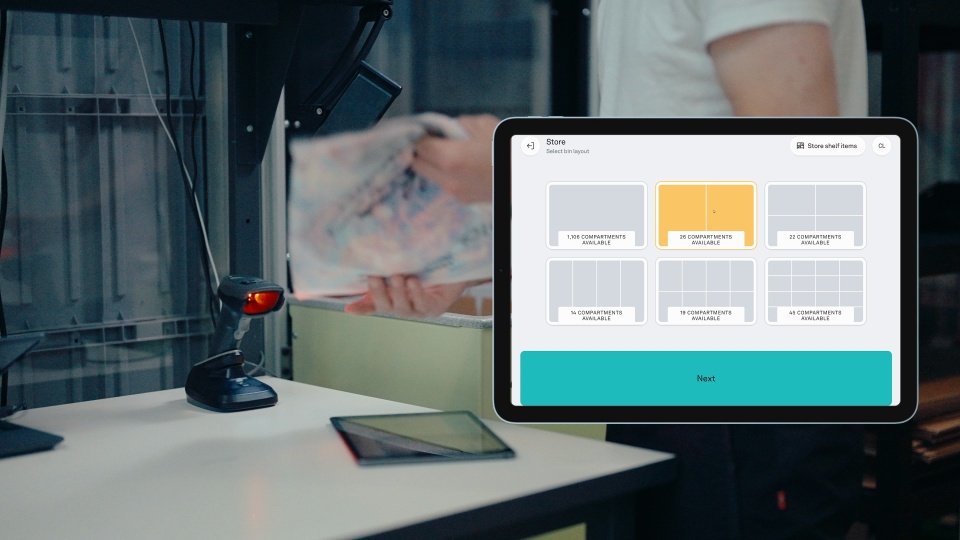
- The Pio App, which works like a simple WMS your team can actually understand
Unlike traditional systems that require custom design, Pio uses a standardized product range, which makes it fast to install and easy to choose from.
You simply pick the system that matches your needs today, from the compact P100 to the higher-throughput P600, and scale up as your business grows. You can even add extra robots during peak periods without redesigning your warehouse.
This is why brands like Vakre Vene, Kattnakken, and Souko use warehouse automation not just to keep up, but to grow faster, stay flexible, and strengthen their brand experience as they scale.
You can see this shift in action at one of our customers, Famme, who handled more than 6,000 Black Friday orders with Pio:
“Pio was definitely a game changer for us. This is how warehouse operations should be run.”
Robert Eggen Stensvold
Head of Logistics of Famme
From packing in a small apartment to operating a modern, automated warehouse, they show what’s possible for small teams that want to scale without chaos.
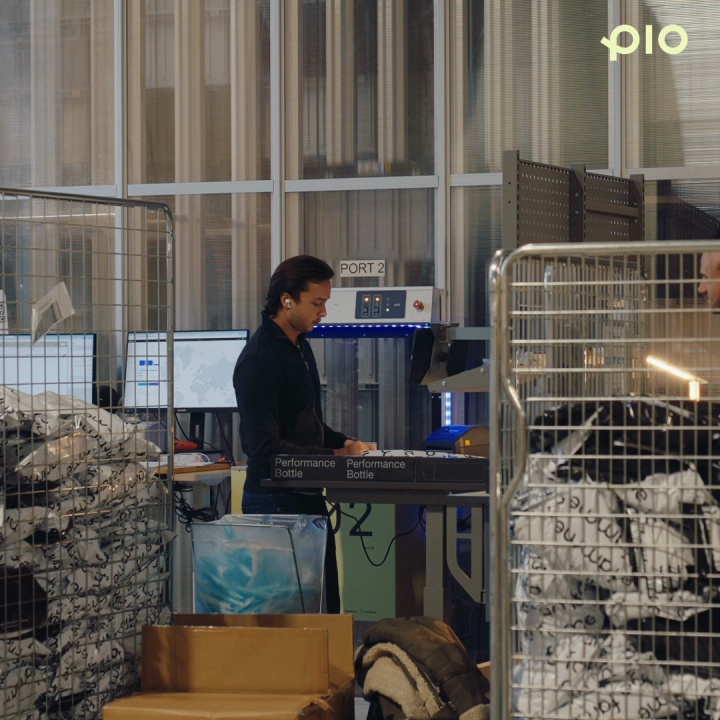
8. Warehouse automation built for the pace of fashion
Fashion is one of the strongest fits for cube storage. Seasons flip, styles change overnight, and order volume spikes with every drop and sale. That pace punishes manual picking, and it's exactly what automation absorbs.
The proof is in the small brands already running on Pio:
-
Blender distributes premium fashion with one person, not several: Pio installed in two weeks, and work that once took multiple employees now runs through a single operator.
-
Vakre Vene stopped running, started packing: their Pio sits directly above the retail store in Harstad, and the team no longer spends half the day walking the warehouse.
-
Ko:Ko picks with one person, done by lunch: "Before Pio, we would've had two people picking all day. Now there's just one person doing it, and they're usually done by lunch," says CEO Øyvind Rekkedal.
-
Dapper doubled capacity without moving: same city-center footprint in Oslo, twice the order volume.
The same logic holds for 3PLs juggling multiple fashion brands. Souko lifted picking speed from 60-80 lines per hour to 240-285, and now onboards new clients in days, not weeks.
9. What this all means for your warehouse
Automation is no longer reserved for giants. It’s becoming one of the smartest ways small and medium businesses stay in control, protect their teams, and ship orders as fast as your customers expect.
If your warehouse feels cramped, chaotic, or unpredictable, there are automated warehouse solutions built specifically for companies your size, and if cube storage sounds like something that could help, the easiest place to start is choosing the system that fits you best.
FAQ: Automated Warehouse Solutions for Small Businesses
- Are automated warehouse solutions too expensive for small businesses?
Not anymore. Many systems, including cube storage, are designed specifically for SMB budgets and don’t require large upfront investments. - What is the best warehouse automation for small teams?
For most SMBs, cube storage provides the biggest improvement in speed, accuracy, and space efficiency. - Do I need a WMS before I automate?
Not always. Some solutions, like Pio, include simple built-in software that works like a light WMS. - How much space can automation save?
Cube storage systems can increase storage capacity by up to 10x in the same footprint, which is why they work well for tight warehouses. - How fast can small teams learn automated systems?
Most SMB-friendly systems are designed to be simple. With Pio, training usually takes just minutes. - Can I start small and scale later?
Yes. This is one of the biggest advantages of modular warehouse automation, start with the size you need now and add robots or modules as you grow. - Does warehouse automation work for apparel and fashion products?
Yes. Garments, shoes, and accessories store neatly in bins, and cube storage handles fast style turnover and seasonal peaks. Fashion brands like Famme, Blender, and Vakre Vene run their fulfillment on Pio.