.webp?width=48&name=Employee-photos--3-2%20(1).webp)



There’s a moment most growing brands hit. Growth is happening, orders are increasing, and the warehouse is still working, but just barely.
Orders are coming in, reviews are strong, and the product line has expanded. With that growth comes more SKUs, and the warehouse that once felt manageable now feels tight and constantly under pressure. Nothing is broken, but everything feels one busy week away from falling behind.
That’s usually the point when warehouse automation enters the conversation. Not because companies want robots for the sake of robots, but because they want control. They want fulfillment to stay predictable as the business grows.
What warehouse actually means
Warehouse automation is the use of software, systems, and equipment to move inventory into, within, and out of a warehouse with less manual effort.
Most warehouse automation systems begin with software that removes manual work, improves accuracy, and keeps inventory updated in real time. From there, picking automation, warehouse robotics, and automated storage solutions streamline how goods move through the operation.
Automation reduces the daily friction teams experience on the warehouse floor. Instead of walking down the aisles searching for products, teams follow guided workflows. Storage becomes structured, inventory updates automatically, and picking gets faster while errors drop.
This is why automation is moving from “nice to have” to operational priority for many warehouses.
Why more warehouses are automating now
Growth usually puts pressure on the warehouse first, with more orders coming in, shelves filling up, hiring getting harder, and the same setup expected to handle more every month.
At the same time, teams want operations to run better, with fewer picking errors, less back-and-forth across the floor, better use of the space they already have, and more consistent fulfillment when things get busy.
Automation becomes a natural next step, helping warehouses handle higher volumes while improving accuracy, space, safety, and day-to-day control.
Types of warehouse automation
Most warehouse automation systems are introduced gradually, based on operational needs.
Digital automation usually comes first. Systems like WMS platforms, barcode scanning, inventory tracking, and ecommerce integrations remove manual work and improve visibility.
Mechanized automation focuses on flow. Conveyors, sorting systems, and guided picking reduce repetitive movement and support picking automation at scale.
Robotic automation focuses on movement and access. Warehouse robotics and goods-to-person systems reduce travel time and keep workflows consistent.
Within robotic automation, one of the most widely used categories is automated storage and retrieval systems (ASRS). These systems store and retrieve inventory using robotics, shuttles, or cranes, increasing storage density and improving picking efficiency.
Where automation makes the biggest difference
Automation usually starts on the warehouse floor, where daily operations happen and inefficiencies are easiest to spot. Once implemented, it typically improves:
-
inbound workflows, including receiving and storing goods
-
storage capacity and inventory control
-
outbound workflows, including picking and packing
-
processing returns and restocking
Inbound workflows become more streamlined, from receiving goods to storing them. Inventory becomes easier to locate and manage, often supported by automated storage and retrieval systems (ASRS) that increase capacity and reduce manual handling. Outbound picking and packing stay consistent during peak periods, and returns are processed and returned to stock faster. Together, these improvements create a more stable and predictable warehouse operation.

What’s changing in warehouse automation
Warehouse automation is shifting from isolated tools to connected systems that work together. The biggest changes include:
-
Greater system connectivity
Tools no longer operate independently. Software, robotics, and inventory systems increasingly sync in real time. -
AI-driven planning and workflows
AI is used to plan inventory, prioritize work, and adjust workflows dynamically as conditions change. -
More modular ASRS solutions
Automated storage and retrieval systems are becoming easier to deploy and scale gradually, without major infrastructure commitments. -
Flexible pricing models
Subscription and service-based models are lowering the barrier to entry, making automation accessible to smaller operations.
Signs it’s time to automate
Most teams begin exploring automation when growth outpaces manual workflows.
Common signals include:
-
storage filling up faster
-
hiring becoming reactive
-
picking accuracy starting to slip
-
order spikes becoming harder to absorb
-
reliance on spreadsheets and workarounds
At this stage, the warehouse moves from planning to reacting, and automation becomes the next logical step.
How to get started
Once teams recognise the signals, the next question becomes where to begin without overcomplicating the operation.
Most automation projects start by understanding how the warehouse actually runs today before looking at specific systems or equipment. That means getting clear on inventory accuracy, current workflows, and how orders move from inbound to outbound. Integrations matter early too, so any new system connects cleanly to the tools already in place.
From there, attention usually turns to the biggest bottleneck. For some operations that’s space. For others it’s picking time, labor pressure, or limited visibility into inventory and order flow.
This is why scalable automation tends to work best for growing brands. It allows capacity to be added gradually, without committing to a full redesign from day one.
What warehouse automation costs
Once teams understand where to start, the next question is usually cost.
Warehouse automation pricing depends on the type of system, the level of robotics involved, and the scale of the implementation.
Some systems require upfront investment in equipment and setup. Others use modular or subscription models, including Robotics as a Service, Automation as a Service, and usage based pricing, allowing companies to adopt automation gradually and expand over time.
This shift is a big part of what’s making warehouse automation accessible to smaller businesses, lowering upfront costs and letting teams scale capacity as demand grows instead of committing all at once.
In many cases, the real comparison isn’t just the cost of automation, but the cost of staying manual. Manual scaling leads to more hiring, more space requirements, more travel on the floor, and more operational complexity as volume increases. Automation, on the other hand, stabilizes operations, improving speed, accuracy, and consistency while reducing the constant need to redesign workflows just to keep up.
What matters most
Trends
-
modular automation systems
-
increased use of robotics
-
AI-driven planning and workflows
-
subscription models
Types
-
digital automation
-
mechanized automation
-
robotic automation
-
ASRS
Best practices
-
start with the biggest bottleneck
-
ensure inventory accuracy early
-
integrate with existing systems
-
scale gradually
Where Pio fits
Once teams decide automation makes sense, the next question is which system actually fits their operation.
Most traditional warehouse automation has been built for enterprise setups, often making it too complex or too heavy for smaller operations. Pio is designed for teams that need more structure and control, without the complexity of enterprise-level systems.
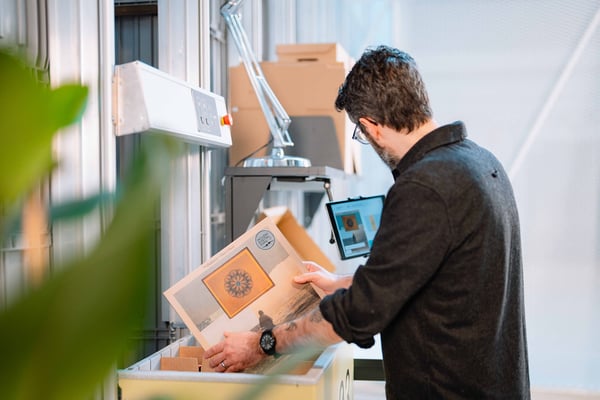
It’s a compact goods-to-person system that helps teams store more in the same space, reduce walking during picking, and keep fulfillment steady as order volumes increase.
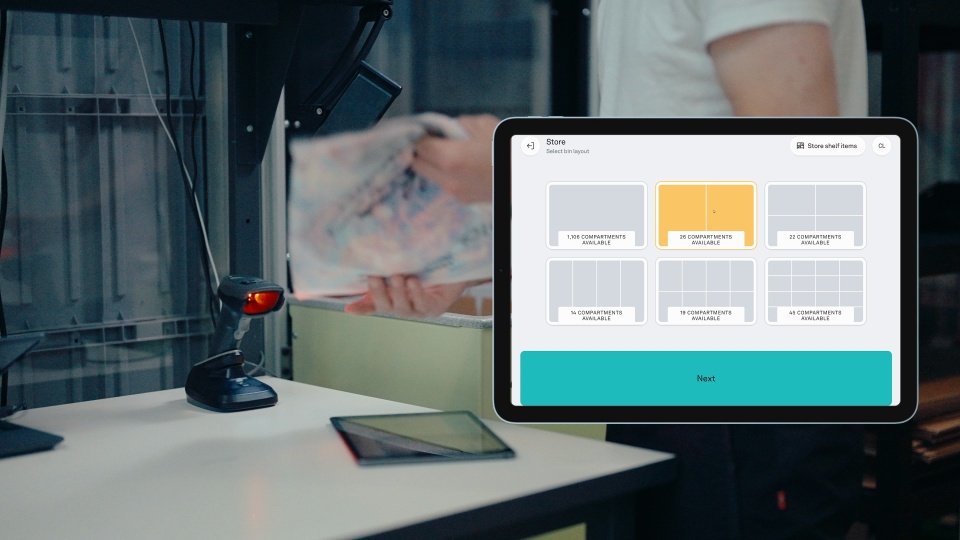
Inventory, orders, and operational data stay accessible in one place through the app, so teams always know what’s in stock, where it is, and what’s moving. It connects with ecommerce, ERP, and warehouse tools already in use, fitting into existing workflows instead of replacing them.
Because it’s modular, businesses can start small and add capacity as they grow, without overhauling the warehouse all at once. That’s what makes automation, including ASRS, realistic for small and mid-sized operations.
The shift is already happening
Warehouse automation isn’t about replacing people. It’s about giving teams the tools they need to keep up with growth and stay in control as operations scale.
Software, robotics, and structured workflows are coming together to create warehouses that run more predictably, absorb peaks more easily, and stay consistent as demand increases.
Growth won’t slow down. Orders won’t get simpler.
The real question is whether the warehouse keeps up or holds growth back.