.webp?width=48&name=Employee-photos--3-2%20(1).webp)


Every growing business reaches a point where its warehouse space can no longer keep up with demand. It is actually a good problem to have. Your business is growing, orders are increasing, and demand is rising.
The flip side is that you probably worry about orders piling up, aisles getting tighter, and teams spending more time looking for products than shipping them. Suddenly, the place that once quietly supported your business becomes the thing holding it back.
This is what happens when warehouse efficiency slips away. If you leave it unchecked, costs climb, fulfillment slows down, and customers start noticing.
The good news is that small, consistent improvements add up fast.
According to research from WERC and Deloitte’s Smart Factory Study, businesses that focus on efficiency often see measurable gains:
- 15–20% more capacity without expanding space
- 4–7% higher labor productivity
- 5–8% better service levels
Focusing on efficiency does not mean you need big budgets or a new building. It starts with taking control of the space you already have, using it a little smarter, tightening daily routines, and shaping a warehouse that can grow with you.
Let’s explore what causes inefficiency, what happens if you ignore it, and what you can do today to turn things around.
When “just getting by” starts costing you
Doing nothing doesn’t keep things stable. It usually makes them worse.
When inefficiency becomes the norm, this is what follows:
- Costs rise due to off-site storage, extra shifts, or wasted labor
- Orders take longer to ship because cluttered aisles slow down picking
- Morale dips when teams spend more time fixing problems than moving forward
- Growth stalls as manual processes and limited space hold you back
These are warning signs that your warehouse has reached its limit. The good news is that every small improvement brings visible results.
1. Get your space working for you
Before renting more space, look at how you’re using what you already have.
Most warehouses can gain 10–15% more capacity just by reorganizing their layout.
- Place your most frequently picked products near packing or dispatch areas
- Group products by type, size, or picking frequency
- Clear out slow, obsolete, or excess stock (SLOBEX)
- Use your vertical space with taller racking, mezzanines, stackable bins, or ideally cube storage automation to truly maximize your space
The goal is not only to fit more products but to make every movement faster and more intuitive.
Cube storage systems are built exactly for this. They turn unused airspace into productive storage and give you room to grow without expanding your footprint. Today, there are affordable and standardized options made for smaller teams, and they can deliver up to 10x more capacity in the space you already have.
2. Improve inventory accuracy
Efficiency collapses when your stock data doesn’t match reality.
If your system says 15 units but the shelf holds 10, you lose time searching, recounting, and apologizing.
Stay accurate by keeping things simple:
- Run stock cycle counts regularly
- Standardize how goods are received, labeled, and stored
- Connect sales and inventory systems to avoid double-booked orders
- Use barcoding or RFID tags to reduce manual entry errors
Accurate data builds confidence and predictability, which is the foundation of any efficient warehouse.

3. Slot like a pro
Slotting is one of the simplest and most effective ways to boost productivity.
Think of it like organizing your kitchen. You keep the essentials within reach, not hidden behind the cereal boxes.
In your warehouse, that means:
- Keep your fastest-moving products closest to where orders are packed
- Store slower-moving products further away, freeing up prime space
- Spread high-volume products across multiple pick zones to avoid bottlenecks
Done right, slotting can increase picking productivity by 10–15% and make your workflow instantly smoother.
4. Rethink your aisle widths
Travel time is one of the biggest hidden costs in any warehouse. Every extra step your team takes is a few seconds lost, and those seconds add up through the day.
Most warehouses are laid out with wide aisles and forklifts in mind, yet that setup eats into valuable space fast. It is a bit like arranging your living room around a giant sofa you barely use. It technically works, but it leaves everything feeling tighter than it needs to be.
Rethinking your layout to shorten walking paths can free up room without expanding your footprint. Even small changes, like shifting racks or repositioning workstations, can completely change how the space feels and flows.
When space becomes a real constraint, cube storage automation takes the idea even further. It removes the need for forklifts, consolidates your inventory into a smaller footprint, and makes every cubic meter work harder. Suddenly the warehouse feels bigger, faster, and much easier to move through.
5. Balance what comes in and goes out
If your warehouse always feels full, it is usually a sign that things are out of balance. When the shelves are packed too tightly, everything slows down. People spend more time moving stock out of the way than getting orders out the door.
Blocked aisles, waiting deliveries, or the need for extra storage are all signals that the warehouse needs a reset.
Clearing excess inventory and smoothing out peaks gives you back space, breathing room, and a calmer workflow.
6. Track, measure, and adapt
Warehouse efficiency is not a one-time project. It is a habit you build over time.
Start simple. Keep an eye on core metrics like:
- Picking accuracy and rework rates. Rework means how often orders need to be corrected.
- Average time per order
- Space utilization and occupancy
- Labor split between receiving, picking, packing, and shipping
Even a basic dashboard can reveal where time or money is slipping away. Once you know what’s slowing you down, you can fix it early before it snowballs.
7. Automate where it makes sense
Automation is no longer a luxury. For many small and mid-sized teams, it has become one of the most effective ways to grow without adding complexity.
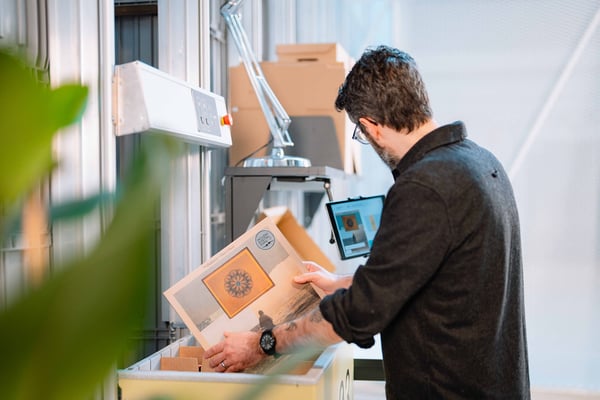
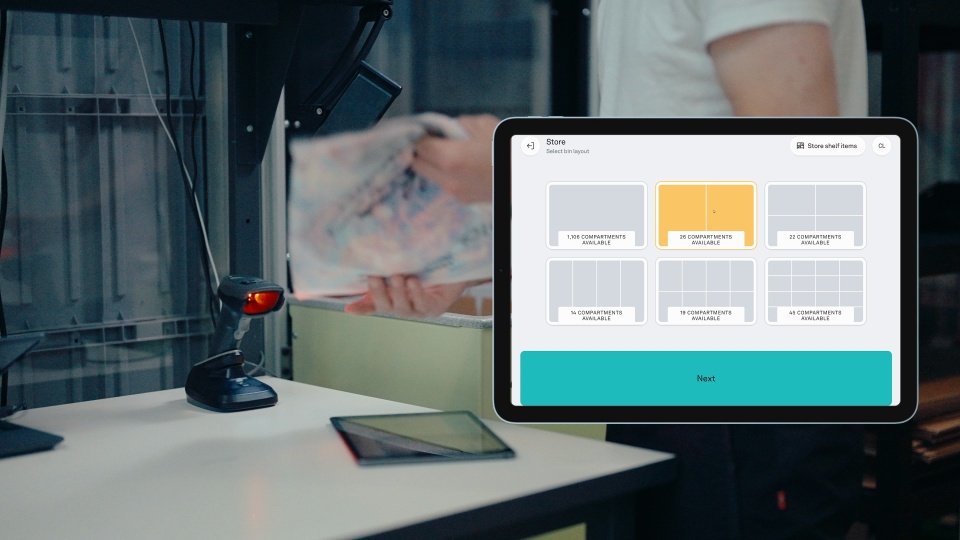
The best place to begin is often with small improvements. Tools like barcode scanners, mobile pick lists, or a lightweight WMS can take pressure off your team and make everyday work feel smoother.
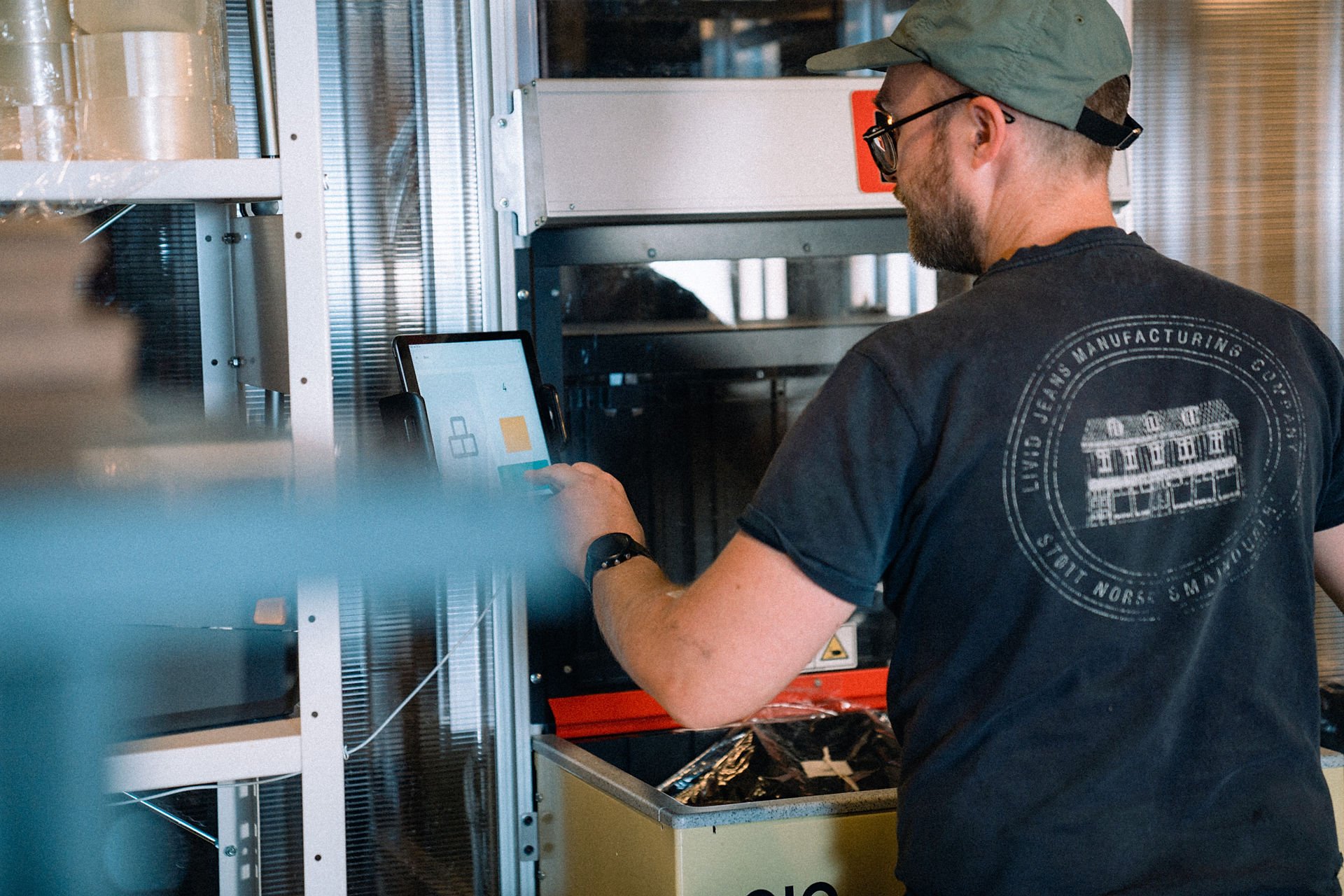
As your business grows, space and speed eventually become the real bottlenecks. This is where cube storage automation can shift everything. Instead of spreading out across wider aisles and extra racks, the system builds upward.
Products sit in a compact grid of bins, and smart robots bring each item directly to your team, which means less walking, less searching, and more time fulfilling orders.
Pio, created by AutoStore’s pioneering cube storage technology, brings this level of efficiency to growing ecommerce brands, busy 3PLs, and B2B companies that want more space, more capacity, and a system that grows with them.
It also fits smoothly into your existing stack, connecting to ecommerce platforms, ERPs, and WMSs through the Pio API or ready-made plugins, keeping everything in sync without extra effort.
Automation naturally becomes the next step when you want a warehouse that feels easier to run and easier to scale.
8. Build for tomorrow, not just today
Efficiency is not only about solving today’s problems. It is about setting up a warehouse that can handle whatever tomorrow brings.
To stay ready for growth, focus on the foundations:
- Choose systems that work naturally with your ecommerce platform or ERP
- Shape your warehouse layout around seasonal peaks and how your business is evolving
- Keep your data clean so new tools connect smoothly when you need them
Warehouses that stay flexible are the ones that keep moving forward. They adapt as demand shifts, as product lines change, and as order volumes rise.
Efficiency is not a finish line you cross once. It is an everyday habit. Small improvements in layout, cleaner data, and the right level of automation all work together to make the entire operation feel lighter.
When your warehouse runs smoothly, everything else follows. Teams move faster, orders stay accurate, growth feels manageable, and automation becomes the step that takes you from keeping up to getting (way) ahead.