See Pio live with one of our warehouse experts:
Merelyn Øglænd, Business Development Manager at Pio warehouse automation company
Craig, Pio warehouse automation sales expert
Simen Aarseth, Product Director and Co-founder of Pio warehouse automation
Partner Knowledge hub Getting started selling Pio

Getting started selling Pio

NOTE: The information in this article is intended for internal partner training purposes only.
For external use, please refer to the approved materials provided to you — including our live, always up-to-date website, official sales collateral, or reach out to our BDM team for additional resources and demo support.


Pio is a product sale, not a solution sale

At Pio, we recognize the unique challenges distributors face when navigating the sales landscape of advanced technologies. Compared to Pio, AutoStore is a more complex solution that requires deep customization, long sales cycles, and extensive stakeholder alignment. But Pio is different.
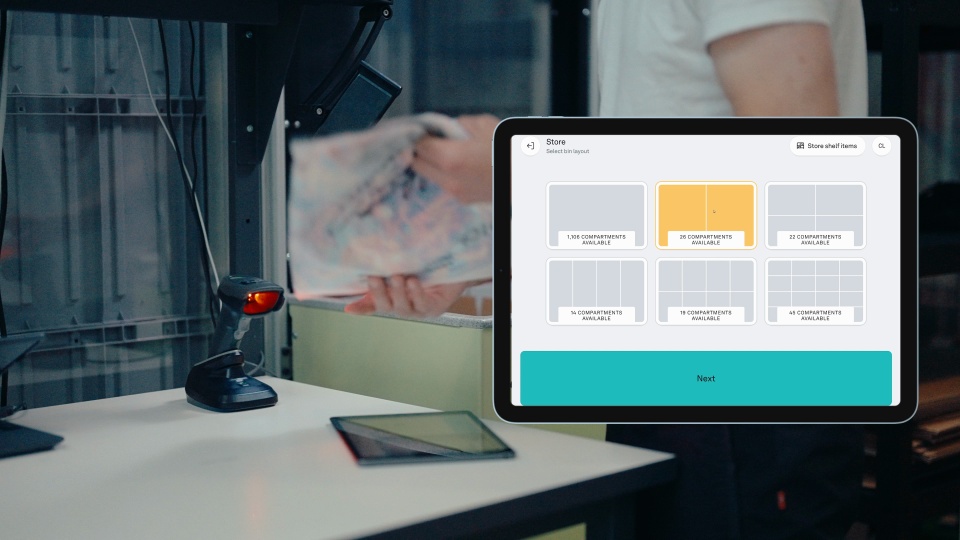
A Shift in Mindset: From AutoStore to Pio

Selling AutoStore often means diving into a full-scale solution sale. It’s about understanding warehouse workflows, integrating robotics, and tailoring systems to fit a customer’s long-term logistics strategy.

Pio, on the other hand, is a product sale—and that distinction matters.

Here’s why:

1. Entry Point Simplicity

Pio is designed as an easy entry point into warehouse automation. It’s standardized, straightforward, and doesn’t require a full operational overhaul to get started. This makes it ideal for customers who want to begin their automation journey without committing to a full-scale solution.

2. Standardized Offering

Unlike solution sales that often involve bespoke engineering, Pio offers a range of standardized products. This reduces complexity for both distributors and customers. Instead of navigating endless customization options, you can simply present the product, highlight its benefits, and let it speak for itself.

3. Embracing Compromise for Speed

Pio is built on the idea that speed and simplicity sometimes require compromise. It may not offer the full flexibility of a custom AutoStore system, but it delivers fast ROI, minimal setup, and a clear value proposition. For many customers, that’s exactly what they need.

4. Focus on Customer Success

Selling Pio isn’t about engineering a perfect solution—it’s about helping customers succeed quickly. Whether they’re new to automation or looking for a scalable entry point, Pio allows them to start small, learn fast, and grow confidently.

What This Means for Distributors

As a distributor, shifting your mindset from solution selling to product selling can unlock new opportunities:

  • Shorter sales cycles
  • Simplified onboarding
  • Broader customer base
  • Faster deployments

With Pio, you sell smarter, not harder. It’s not a replacement for AutoStore, but a product that meets customers at the right stage of their business journey and grows with them.

Tools to use

Pio created a Sales Presentation for you to use when starting the conversation with a prospective customer. Click here to view the Sales Presentation


Partner Resources:
As a Pio partner, you have access to several resources including the Pio Sales Presentation and the Pio Design Proposal. Find them at
pio.com/partner.


NOTE: The information in this article is intended for internal partner training purposes only.

For external use, please refer to the approved materials provided to you — including our live, always up-to-date website, official sales collateral, or reach out to our BDM team for additional resources and demo support.


FAQs

Sorry, no questions found that match your search term
General Information
What is Pio and how does it work?
Pio is standardized, plug-and-play warehouse automation built on AutoStore technology for growing businesses. Products are stored in bins stacked in a compact cube storage grid. Robots on top of the grid bring the right bin to a port, the workstation where your team picks, and the Pio app manages inventory and orders. Pio comes in four sizes, from P100 to P600. More on How Pio works.
Can we lease a Pio system?
Yes. Many of our customers lease Pio through their own financing providers.
Is it possible to add extra robots for a short time?
Yes. You can add booster bots for a minimum of three months to cover peak demand, then deactivate them when things slow down. More on booster bots.
What if we outgrow our Pio system?

You can expand from the P100 up to the P600 without starting from scratch, adding robots, ports, and bins as your orders grow. If your business outgrows the Pio lineup, we can help you move to a full AutoStore solution.

Can I get a Pio for a lower ceiling than the heights shown in your pricing?
Yes. Smaller configurations than the ones shown in our pricing are available on request, down to a minimum ceiling clearance of 8.9 ft (2.7 m). Contact us for more information.
How reliable is the system?
Pio and AutoStore sites maintain 99.7% uptime, with no single point of failure. In case of a robot malfunction, the affected robot can be parked, and the system remains operational while you address the issue or await a replacement.
What happens if something goes wrong?
A member of your team is trained as a Super User and should be on site whenever the system is running. They can resolve the most common issues. For anything else, check the Pio Help Center.
What servicing or maintenance is necessary for the system?
To swap or service a robot, you use the lift to bring it down from the grid and back up again.
How do we clean the system?
The ports and grid tracks should be vacuumed annually or when visibly dusty. This process takes less time than cleaning a manual warehouse.
What are the bin dividers made of?
The bin dividers are made of cardboard.
How many ports do I need?

Pio always includes a minimum of two ports, assuming space allows. How many you need depends on your daily volume of order lines. More on how Pio works.

Can you move the system to another location?
Yes, Pio systems can be deconstructed and relocated.
What is the ROI for a Pio system?
Considering all cost savings, Pio typically achieves an ROI within 12 to 18 months, depending on the initial investment.
How much space can we save?
Pio can reduce your storage footprint by up to 90%. Bins stack directly on top of each other in a compact grid with no aisles in between, so the same inventory fits in a fraction of the floor space. More on How Pio works.
How many people do I need to run Pio?
Just one. One person can handle picking and packing at up to 170 order lines per hour.
Technical Specifications
What is the size of a bin?
Bins have inside dimensions of 16 × 24 × 12 inches (403 × 603 × 312 mm), a storage volume of 2.67 cubic feet (75.5 liters), and a load limit of 66 lbs (30 kg).
How much fits in a bin?
A bin can hold up to 70 t-shirts, 200 iPhones, or 5 shoe boxes.
How many SKUs can I fit in a bin?
Up to 16. Each bin can be split into 1, 2, 4, 8, or 16 compartments, with one SKU per compartment.
How many robots do we need?

The minimum is 3 robots for a P100. How many you need depends on your operations, and you can add robots to increase pick speed. More on booster bots.

How many bins do we need?
It depends on how many SKUs you have, the size of each product, and how much inventory you keep of each. Each bin can be split into 1, 2, 4, 8, or 16 compartments, with one SKU per compartment, so small items can share a bin while bulky items take a whole one. A good starting point is to group your products by size and estimate how many compartments each group needs for the inventory you keep. Contact us for more information.
How long does it take to get a bin from the bottom of the grid?
Up to 3 minutes and 36 seconds in the worst case, for a bin at the bottom of a full-height stack. On average, a bin requested without advance preparation arrives in about 25 seconds across Pio systems.
Installation
How long does installation take?
A standard P100 can be installed in as little as 5 days. Installation time for larger systems depends on size and configuration. More on installation.
How long from signed contract until installation?
Delivery typically takes around 10 weeks in Europe, up to 16 weeks on the East Coast of the U.S., and up to 20 weeks on the West Coast and in Japan.
What permits are required?
Required permits depend on location and may include fire protection, structural, and electrical permits.
System Operations
What happens if the power goes down?
A backup power supply enables a controlled shutdown in case of a power outage, preventing data loss. Once power returns, the system can be restarted and resume operations.
What happens if the internet goes down?
Pio software requires a stable internet connection for communication with cloud-based software. If the internet connection is lost, Pio and other fulfillment-related software, such as ecommerce, ERP, and shipping platforms, will be unavailable.
How much power does the system use?
Each robot uses about 100 watts while operating, so ten robots use about as much power as a single vacuum cleaner. Each port uses about 20 watts on average.
Can Pio track batches and expiration dates?
Yes. Pio tracks batch numbers and expiration dates, and picks the items that expire first (FEFO, first expired, first out), so older stock goes out before it expires. More on batch and expiration tracking.
Do we need a WMS if we use Pio?
Pio can operate without a WMS, and many customers use Pio with inventory and order management features in their ERP or ecommerce platform. However, Pio also integrates well with a WMS if required.
Inventory and Order Management
What is the difference between order lines and bin presentations?
An order line is one SKU in an order, while a bin presentation is each time a bin is brought to the port. For example, an order with 4 different SKUs has 4 order lines. Sometimes one order line requires more than one bin presentation. If you need 10 units of a SKU but the first bin contains only 7, a second bin is presented to pick the remaining 3.
How do we restock Pio?
Restocking, or putaway, is done through the Storing flow in the Pio app. Add items to the compartment presented at the port, confirm when it's full, and Pio presents the next available compartment. You can also restock from a purchase order, which updates as items are received.
What if some items don't fit in the grid?
Store as much as you can in the grid to keep inventory management simple. For items that don't fit in bins, Pio supports shelf locations and batch picking, with a consolidation flow that merges orders from shelves and bins.
How does Pio handle large B2B orders?
B2B orders are processed as regular orders in Pio. By adding a tag and setting a prioritization rule, B2B orders can be scheduled for specific time slots, so your consumer orders can keep priority.
How does Pio handle returns?
Returns are first processed in your ERP, WMS, or ecommerce platform, then added back into Pio through the standard storing flow. Returned items can be placed in smaller compartments so they're prioritized for upcoming orders, or stored with the same SKU already in Pio to make better use of bin space.
How do we keep bins well filled without spreading one SKU across too many compartments?
The Pio picking algorithm consolidates compartments that hold only a few items, which keeps fill rates up. Some spread is useful, since a SKU in more than one compartment is faster to reach, and the inventory report shows where fill rates are low.
Safety and Compliance
Can I store lithium-ion batteries or other hazardous materials in Pio?
It depends on the material. Lithium-ion batteries and other hazardous materials should be stored according to safety guidelines and assessed for risk. A risk assessment, together with the supplier's safety documentation, can determine whether additional safety measures are necessary.
Is there a risk of injury at the ports?
All AutoStore modules (which are also used by Pio) meet global safety standards, making port operation safe and ergonomically beneficial compared to manual warehousing tasks.
Integrations
Can I connect more than one store or sales channel to Pio?
Yes, multiple external integrations can be active simultaneously.
Do you have an open API?
Yes, a public integration API is available at dev.pio.com.
How are the shipping labels printed?
Pio integrates with shipping management software to automate label printing when Pick & Pack completes. A selection of pre-integrated shipping software is available, and additional integrations are supported via the API.
Can we use other forms of automation in sync with Pio, e.g., a packaging system?
Yes, it is possible to set up larger systems of physical automation to sync with Pio.
Will Pio integrate with my WMS? ERP? CMS? Ecommerce platform?
Pio offers a selection of pre-integrated WMS/ERPs, and additional integrations can be made through the open API.
Pricing
How much does a Pio cost?
Pio starts from $146,700 for a P100, plus a subscription from $4,996/month. The upfront cost covers the hardware and installation, and the monthly subscription covers the Pio app, robots, and ports. The Service Level Agreement (SLA) is excluded from the monthly subscription. More on Pio pricing.
Are there different pricing plans for the app and services?
We’re committed to simplicity and transparency. With one straightforward pricing plan, we make it easy for you to get the most out of our services and apps.
What's included in the upfront cost?
The hardware purchase price includes the aluminum grid, bins, service tower, and walls. An additional fee will be quoted based on your warehouse location and covers delivery and implementation services, local building and fire permits, shipping, additional scope items, installation and build, and mandatory training.
Are there any costs not covered by the upfront cost?

Shipping and customs costs are not shown online. Additionally, you'll need to source and purchase any peripheral equipment, such as iPads, scanners, and printers, as these items are typically already owned by customers. A workstation or desk for storing and fulfillment operations is also not included.

Depending on your warehouse, there may be additional costs for any building modifications required by your insurance company or local regulations. We can offer initial guidance, but you are responsible for building modifications and any necessary permits. Many customers work with an experienced service provider for this process, and Pio is building a network of partners to assist where needed. Lastly, if you're connecting to Pio through the API, you'll be responsible for setting up the integration.

We're building a network of integration partners who can assist. Just reach out for more information.

What's included in the monthly subscription?
The monthly subscription covers hardware rental (robots, ports, chargers, service trolley, and controller) and the Pio software. The Service Level Agreement (SLA) is not included in the monthly subscription. Get in touch for a full quote.
Can I add more robots to the system to cover peak periods?
Yes, you can order booster bots for a minimum of 3 months. If you need a more permanent increase in throughput, you can keep them as long as needed. We’ll charge the same monthly rate per additional robot, plus a one-time fee for shipping and administration.

media--full-bleed

Lorem ipsum dolor sit amet, consectetur adipiscing elit, sed do eiusmod tempor incididunt ut labore et dolore magna aliqua. Ut enim ad minim veniam, quis nostrud exercitation ullamco laboris nisi ut aliquip ex ea commodo consequat. Duis aute irure dolor in reprehenderit in voluptate velit esse cillum dolore eu fugiat nulla pariatur. Excepteur sint occaecat cupidatat non proident, sunt in culpa qui officia deserunt mollit anim id est laborum.

Lorem ipsum dolor sit amet, consectetur adipiscing elit, sed do eiusmod tempor incididunt ut labore et dolore magna aliqua. Ut enim ad minim veniam, quis nostrud exercitation ullamco laboris nisi ut aliquip ex ea commodo consequat. Duis aute irure dolor in reprehenderit in voluptate velit esse cillum dolore eu fugiat nulla pariatur. Excepteur sint occaecat cupidatat non proident, sunt in culpa qui officia deserunt mollit anim id est laborum.

Lorem ipsum dolor sit amet, consectetur adipiscing elit, iusmod tempor incididunt ut labore et dolore magna aliqua

Lorem ipsum dolor sit amet, consectetur adipiscing elit, sed do eiusmod tempor incididunt ut labore et dolore magna aliqua. Ut enim ad minim veniam, quis nostrud exercitation ullamco laboris nisi ut aliquip ex ea commodo consequat. Duis aute irure dolor in reprehenderit in voluptate velit esse cillum dolore eu fugiat nulla pariatur. Excepteur sint occaecat cupidatat non proident, sunt in culpa qui officia deserunt mollit anim id est laborum.

Lorem ipsum dolor sit amet, consectetur adipiscing elit, sed do eiusmod tempor incididunt ut labore et dolore magna aliqua. Ut enim ad minim veniam, quis nostrud exercitation ullamco laboris nisi ut aliquip ex ea commodo consequat. Duis aute irure dolor in reprehenderit in voluptate velit esse cillum dolore eu fugiat nulla pariatur. Excepteur sint occaecat cupidatat non proident, sunt in culpa qui officia deserunt mollit anim id est laborum.

Lorem ipsum dolor sit amet, consectetur adipiscing elit, iusmod tempor incididunt ut labore et dolore magna aliqua

Meet our team

We're dedicated logistics experts, here to get your warehouse running at its highest potential.

Image
play video

Lorem ipsum dolor sit amet, consectetur adipiscing elit, sed do eiusmod tempor incididunt ut labore et dolore magna aliqua. Ut enim ad minim veniam, quis nostrud exercitation ullamco laboris nisi ut aliquip ex ea commodo consequat. Duis aute irure dolor in reprehenderit in voluptate velit esse cillum dolore eu fugiat nulla pariatur. Excepteur sint occaecat cupidatat non proident, sunt in culpa qui officia deserunt mollit anim id est laborum.